AI poses new challenge for product liability
Global RisksArticleJune 8, 2026
The growing popularity of AI products and services poses a major challenge for product liability, making product liability claims potentially more complex and costly to defend, according to John Shane of Zurich Insurance Company.
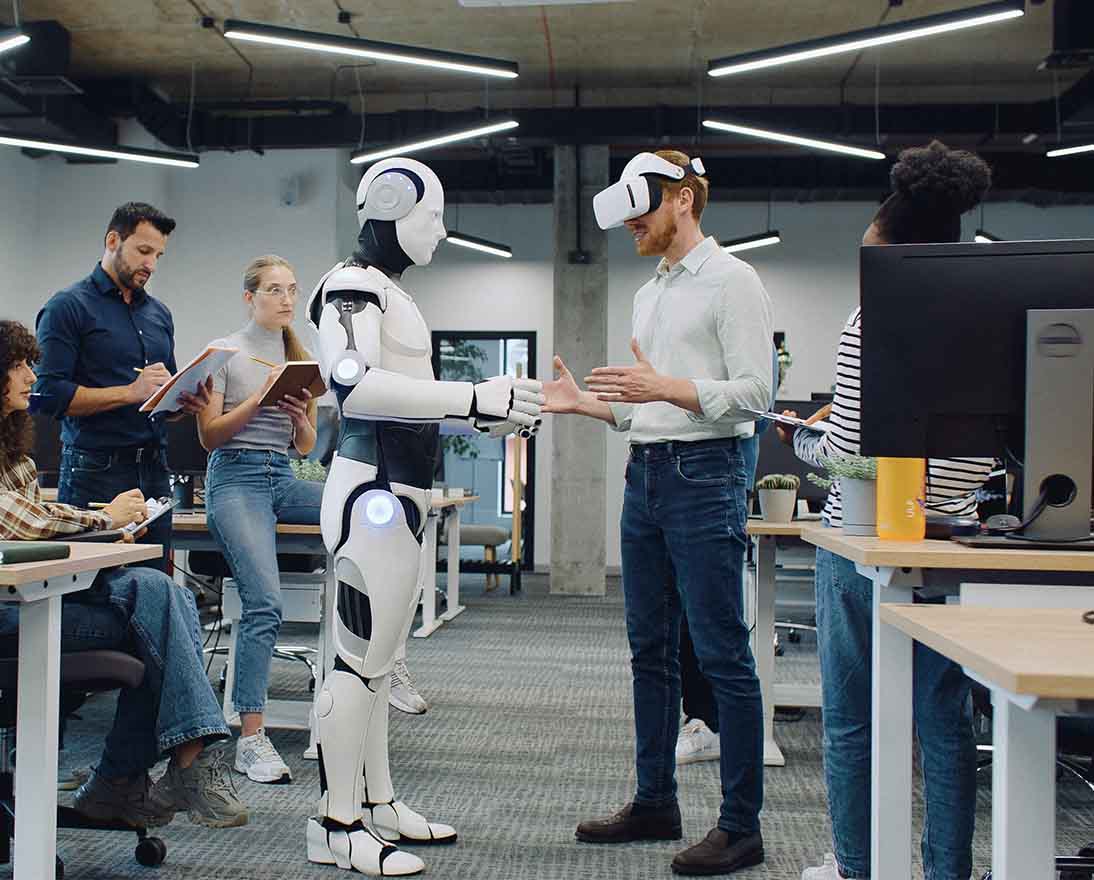
AI is more than just software – it is increasingly interacting with the physical world. Autonomous vehicles are taking to the roads while advanced robotics are in our workplaces and public spaces. AI-enabled products are also beginning to find uses in our homes, from interactive toys to smart appliances, while chat bots and AI agents offer consumers advice and carry out tasks on their behalf.
But what happens when AI-products cause harm or damage? By its nature, AI is technically complex - decision making is opaque and models are continually learning – and establishing liability and causation is likely to be challenging. At the same time, existing product liability laws in most countries do not yet directly address AI, leaving consumers with unclear pathways for redress and creating uncertainty for businesses.
Moves to update product liability laws are, however, underway, most notably in Europe, where a new Product Liability Directive will extend to AI. Even so, new and existing product liability regulations will require interpretation and the courts will need to resolve a series of complex legal and technical questions. Risk managers, supported by their insurers, will need to carefully navigate these evolving legal frameworks going forward.
Potential AI-harms
As with all products, safety is paramount. A defective or misused AI product could cause bodily injury or physical damage to property (autonomous vehicles, for example, have been involved in a number of fatal accidents while a worker in Korea was crushed by a robot in 2023 after it mistook him for a box). Similarly, AI-healthcare systems have been known to misdiagnose while chatbots have provided misinformation (in 2024, Air Canada was ordered to pay compensation after its chatbot gave inaccurate information).
There is also concern that AI-enabled products can cause psychological harm, including distress, addictive behavior and psychosis, especially among vulnerable groups. In Italy, authorities are investigating whether cosmetics firms used social media to sell inappropriate beauty products to young children. AI chatbots have also been linked to suicides, murders and mass shootings in the US, resulting in legal action (OpenAI faces both a criminal investigation and civil litigation into whether its large language model played a part in a mass shooting at Florida State University last year).
Evolving AI-liability
In much of the world, existing product liability regimes pre-date AI and are built around tangible physical products and linear supply chains. In contrast, AI has fragmented supply chains (it relies on a cast of suppliers, including model developers, data providers, trainers, data centers and infrastructure services), while the technology is often both opaque and evolving – unlike physical products AI can act autonomously and is adaptable, learning over time.
Under current product liability legislation, those harmed by AI products and services may not have a legal route to redress, while liability gaps could emerge in the future – where no legal person or entity is liable for harms caused. At the same time, the nature of AI is likely to create specific challenges around establishing liability and causation – giving rise to a host of potential legal questions, such as what constitutes a product, damage or defect in the context of AI, as well as which parties can be held liable.
EU Product Liability Directive
While many parts of the world still rely on decades-old product liability regulation, some jurisdictions are implementing reforms. The UK, for example, still relies on the Consumer Protection Act 1987, which the Law Commission says is no longer fit for purpose in the age of AI. The Law Commission has been tasked with reviewing the UK’s product liability regime, with emerging technology in mind. The UK government also recently launched a consultation to overhaul the existing product safety law.
Leading the way is the EU’s revised Product Liability Directive (PLD), which is due to be transposed into national law by December 9th, 2026. Significantly, the updated PLD expands the definition of a product to include software – including AI -and therefore subject to strict liability. At the same time, the revised PLD extends the definition of damage to include psychological harm, and pushes liability beyond manufacturers and further into supply chains (under the revised PLD, product modifiers, distributors and online platforms can potentially be held liable for a defective AI product).
Product liability is not the only relevant regulation for AI products. The new PLD, which harmonizes product liability across the EU, is intended to work alongside the EU AI Act, which entered into force on 1 August 2025. Where the PLD provides strict liability for consumers seeking redress for harm caused by defective AI, the EU AI Act sets minimum standards for AI-related risk management and compliance. Last year the EU withdrew proposals for an AI Liability Directive, meaning that the PLD will be the primary mechanism for consumers seeking compensation for AI-related harm within the European Union from December 2026.
More complex, costly litigation
The revised PLD will fundamentally change product liability in Europe, while the nature of AI will significantly increase the complexity of product liability litigation. In addition to introducing strict liability for AI products, the PLD eases the burden of proof for claimants and places more demanding disclosure requirements on defendants, in part to reflect the technical challenges for claimants alleging that an AI-product is defective.
Significantly, under the PLD, claimants will be able to request that the defendant disclose information ( including confidential commercial information) on an AI-system, such as algorithms, training data and guardrails . Given the 'black box’ nature of AI models and their complex supply chains, this is likely to present a significant challenge. If a defendant is unable to explain the workings of an AI system, the PLD allows a court to presume the product is defective.
While updating product liability law to reflect the modern world makes sense, the PLD is set to bring about an alarming increase in discovery. At present, member states have yet to provide guidance on discovery under the new PLD, and there will be questions around courts’ ability to manage this unfamiliar process. For risk managers and insurers, more discovery and complexity will only increase the cost of litigating claims.
Role for risk managers
Givin these challenges, manufacturers – and other stakeholders in the product value chain – will need to proactively identify where AI is incorporated into a product and/or the product cycle. They will also need visibility around how any AI component is designed, trained and tested, as well as the guardrails in place to ensure that AI-products and services are safe for consumers. And considering the complex and diverse nature of AI supply chains, special attention should be paid to supplier contracts, including provisions such as hold harmless or recovery clauses.
Risk managers have a vital role in helping product development teams and others in the organization understand the potential risks for AI products and the potential liabilities and regulatory obligations. They can also draw on the knowledge and expertise of insurers, which can help interpret regulations and explore loss scenarios for AI products, and help insureds prepare for more complex discovery and defense.
Conclusion
AI poses a formidable challenge for product liability. The PLD, in combination with the EU Representative Actions Directive, is expected to drive product liability litigation for European companies going forward. Adding AI to the mix will undoubtedly make product liability claims yet more complex and costly to defend, requiring far greater levels of technical expertise, support and preparation.
Originally published in Commercial Risk on June 8, 2026