Data center risk profiles are changing at pace: how should businesses respond?
ConstructionArticleOctober 14, 2026
Risk managers are urged to engage early and consider the full project lifecycle to avoid policy gaps.
Global data center development shows no sign of slowing. Project costs, frequency and scale continue to exceed expectations. The average monthly spend on data centers in North America, for example, increased from around $500 million in 2021 to $3-4 billion just four years later, based on Zurich’s data, according to Patrick McBride, Zurich’s Head of International Construction, Global Specialty, speaking on a Commercial Risk webinar, Building at scale: Managing risk in global data centre expansion.
While the US is expected to account for around 40% of global data center capital expenditure by 2030 (McKinsey), the UK, Europe and Asia are seeing healthy growth and Asia could outpace the US within five years. Globally, it is estimated that more than 10,000 data centers will be operational by 2030 (ABI Research).
“It is the industrial revolution of all our careers,” reflected McBride. “We have never seen the size, ferocity and frequency of projects in any other industry.”
The race for power
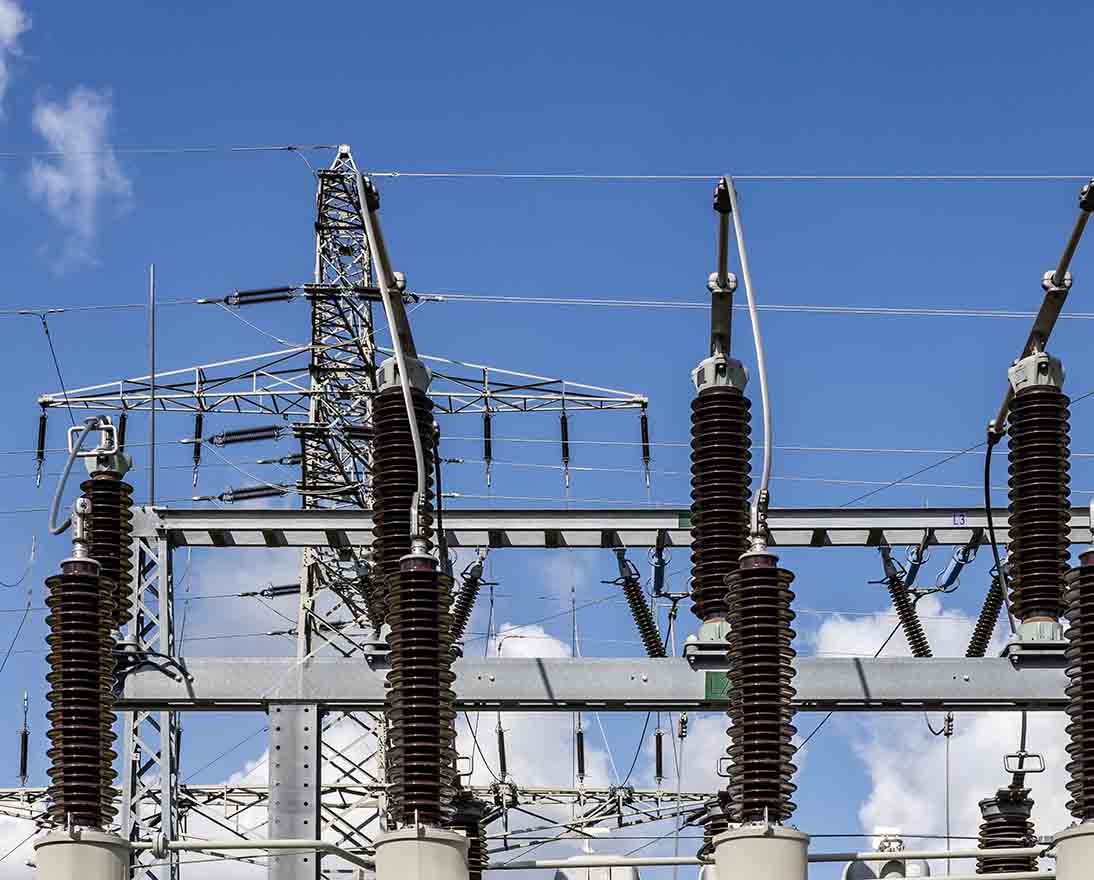
One of the most significant challenges facing data center development is meeting growing power and infrastructure demands. And it’s not just the quantity of power, but the consistency of supply, with some contracts allowing just two minutes of power outage in any given year.
Over the past two years, the search for land availability and power supply has driven a “dramatic shift” in data center location within the US from populous coastal regions to more remote inland locations, observed McBride.
As securing power becomes an increasingly integral part of the project, developers are seeking to engage directly with utility providers to secure power earlier in the project lifecycle.
“Bring your own power” models are becoming increasingly common, and a growing number of developers are building dedicated gas-powered stations onsite or adjacent to the project.
Renewable energy sources such as solar and wind can form part of the power mix, but their variability means they are generally supported by grid connections, storage or other generation sources where continuous supply is required. Small modular nuclear reactors are also attracting growing interest, although deployment at scale remains some way off.
The shifting risk profile: size, speed and concentration
Zurich has been closely involved in data center projects since their infancy, writing its first policy as long ago as early 2000s. During that time the risks and challenges have evolved considerably – but perhaps never more so than in the last five years, the webinar heard.
The speakers identified three core areas of rapid change.
The first and most obvious is in the sheer size – and therefore cost – of the projects. The average data center within Zurich’s portfolio in 2020 represented $185 million in hard costs – a figure that exceeded $800 million by the end of 2025 and is projected to reach $3-4 billion this year based on Zurich’s own data.
It is not just the physical size that is driving exposures, but the rapidly increasing cost of equipment which can now reach twice the value of the building itself, said McBride.
Delay-related coverages such as DSU (Delay in Start-Up) are also reaching unprecedented levels, and now commonly exceed $1 billion (Zurich’s data), as higher revenue exposure combined with long lead times for critical equipment, mean that even relatively minor physical damage can result in significant delay-related losses.
The second change to risk profiles is the speed at which projects are brought to market. As Vincent Banton, Head of Construction and Infrastructure Asia at Aon, told the webinar, aggressive program schedules can result in a “loss of program resilience.”
For example, compressed timelines mean multiple contractors working simultaneously, more frequent and late-stage design changes, and greater disruption caused by long lead times on equipment.
“It’s not just the speed of construction but the speed to market…Some of the floors might go into operation while other floors are still under construction,” said Banton.
Finally, concentration risk is increasing, extending beyond the accumulation of asset values to encompass critical dependencies across supply chains. A relatively low-value component, such as a transformer or switchgear, can create significant DSU exposure if replacement takes 12 months or more, noted Banton.
Specialist talent is similarly concentrated, with a limited pool of contractors available to undertake complex data center work across power, cooling and water infrastructure.
Emerging claims trends and pressure on capacity
Turning to claims experience, Zurich’s large loss data shows that fire and explosion is the leading cause of claims by value – triggered predominantly by hot-works but amplified by disproportionately high clean-up costs from smoke damage.
Many businesses underestimate the growing impact of severe weather in the US, which is the second largest cause of loss according to Zurich’s loss data, warned McBride. Secondary perils such as hail, straight-line wind and tornado can be particularly problematic: “The frequency of those losses has not been large, but when they happen, they consume a lot of the claim proportion.”
Looking at emerging exposures, Banton urged risk professionals to be mindful of the accumulation impact of increasingly expensive equipment. The growing concentration of high-value GPU servers, which could collectively be worth more than$10 million per project within the next year, is a case in point:
“An accidental fire can wipe out a few of those in a very short space of time and that’s where we’re seeing the biggest risk for severity moving forward,” he said.
The increasing scale and frequency of projects are also testing insurance-market capacity. Those pressures became particularly apparent last year, as private equity began entering the sector and lenders increasingly requested projects carry full limits, observed McBride.
While these requirements are not radically different from historical measures, the scale of projects has placed strain on the market’s ability to accommodate the limits being sought. “No single carrier can solve the capacity challenge, so it will need a collective perspective,” he added.
How to optimize your risk profile
Early planning and engagement with third parties, including insurers, have become key to successful outcomes, the webinar heard. “Exposures aren’t that different, but the speed is critical,” said McBride. “Engage early, often and with market-leading carriers to understand trends and insights.”
It is also important to examine the full lifecycle of the project from the outset, advised Banton. For example, protection gaps can emerge as the project transitions between phases and policies.
Finally, put resilience at the heart of risk planning. Companies that demonstrate resilience measures across the lifecycle of the project are not only more likely to deliver a successful project, but will also benefit from improved underwriting outcomes:
“There is a risk-separating factor between those organizations that have long-term visions versus those that don’t,” said McBride. He urged businesses to differentiate themselves by “leaning into their resilience strategies, asking challenging questions and working with resources to move, grow and learn.”
As data center projects become larger, faster and more power-intensive, decisions made early in the project will increasingly shape their risk profile and insurance requirements. The key takeaway from the webinar was that businesses that engage early, plan across the full lifecycle and prove resilience will be best placed to secure capacity and keep pace with the fast-changing risk landscape.
Originally published on Commercial Risk on October 14