Carbon removal & carbon neutrality
Taking action for net-zero operations
From carbon neutral to net-zero: our journey in carbon removals
Zurich began compensating our operational carbon emissions1 over a decade ago, as we saw value in leveraging carbon financing initiatives to support climate protection projects outside our direct value chain. What started as an approach based on carbon neutrality - the standard of its era - has evolved into something more stringent: reducing our own operational emissions1 toward a 2030 net-zero target while becoming an early actor in the permanent carbon removal market.
Our journey
A decade ago, carbon neutrality was the benchmark. Companies reduced what they could and offset the rest, typically by funding projects that avoided emissions elsewhere, such as forest conservation. It is a meaningful step, but science has since moved on.
Net-zero raises the bar. It demands that emissions are reduced as deeply as possible, and that only residual emissions be balanced by removing carbon already in the atmosphere - not just preventing new emissions.
To manage this transition, we continue purchasing carbon offsets, while supporting carbon removal projects largely through pre-purchasing agreements, to reach net-zero by 2030 for our own operations1.
Carbon neutrality vs. net-zero: why the distinction matters
Carbon offsets fund projects that help avoid emissions from being released into the atmosphere. They are valuable, but not the same as physically taking CO2 out of the air. Carbon removal certificates, by contrast, represent CO2 that has been independently verified as extracted from the atmosphere and stored long-term.
| Zurich’s Approach to: | Carbon neutrality | Net-zero |
|---|---|---|
| Mechanism | Offsetting - funding projects that avoid emissions elsewhere | Carbon removal - physically extracting CO2 from the atmosphere and storing it permanently |
| Examples of projects supported | Rimba Raya REDD+ forest conservation, Indonesian Borneo (protecting 130M+ metric tons) | Portfolio of removal certificates across 9+ projects, e.g. biochar, DAC, ERW, mangroves, biomass burial |
| Role of offsetting | Compensates annual operational emissions1 on a like-for-like basis | Offsets maintained during transition; removal certificates grow to cover residual operational emissions1 by 2030 |
Through our pre-purchasing agreements, we aim to ramp up our supply of carbon-removal certificates to eliminate the same amount of CO2e as we produce — from 2030 onwards.
Why take action now in an immature market?
The carbon removal industry is nascent. Most of the solutions needed to meet global climate targets at scale do not yet exist at commercial volume. Early buyers play a critical role: pre-purchase agreements provide upfront capital that allows innovators to launch, prove their technology, and attract further investment.
We structure most contracts as pre-purchase agreements - committing to buy, with partial payments upfront and further tranches released as milestones are met. Due diligence precedes every partnership, and we monitor progress closely throughout. In 2025, InterEarth, one of our first early-stage carbon removal projects, delivered its first certificates to Zurich six months ahead of schedule.
The urgency of the situation means we need to be proactive and help scale up the carbon removal industry, which is still in its infancy.
Our removal portfolio
We take a deliberate portfolio approach — combining nature-based and technology-based solutions to manage risk and reflect climate science, which is clear that no single method can meet global needs alone. Forestry and biodiversity conservation remain important alongside removal investments.
Our projects and partners
Biomass Burial
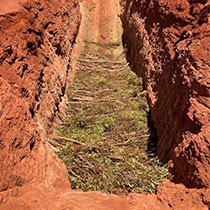
On degraded, low rainfall, and previously cleared farmland in Western Australia, InterEarth plants native species that produce woody biomass, well suited to the arid climate. This biomass is grown, harvested, and then buried in sealed underground cavities to permanently store the carbon it has captured.
In addition to their own biomass, InterEarth also accepts certain waste woody biomass from third parties, especially material at high risk of being left to decompose or fueling wildfires. By burying biomass, InterEarth prevents decomposition and the release of carbon back into the atmosphere, while also helping to reduce wildfire risks—supporting a safer and more sustainable environment.
Forest waste to biochar
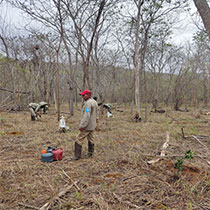
Another part of the jigsaw can be found in Oregon, USA.
Oregon Biochar Solutions produces high-quality biochar, mainly sourced from forestry waste, including fire hazard biomass and forest fire burnt wood.
Removing forest waste material reduces the risk of future fires and puts waste material to productive use. The company also donates some of its revenues to the local fire department.
Direct Air Capture
Parallel Carbon, Inc. (Parallel Carbon) removes CO₂ from the atmosphere using a passive Direct Air Capture (DAC) system that utilizes a mineral sorbent. The sorbent is derived from limestone, a low-cost, globally abundant material. After capturing CO₂, Parallel Carbon uses an innovative electrochemical process to extract the atmospheric CO₂ from the limestone to create a pure stream of CO₂ for permanent geologic storage. The mineral sorbent is regenerated and reused in the process. Electrochemical DAC avoids the high heat required by traditional mineral sorbent methods and instead uses low-cost, intermittent renewable energy.
Paper mill waste to Biochar
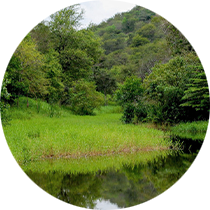
Wakefield BioChar supplies high-quality biochar derived from waste biomass generated by paper mills during their production processes. In normal circumstances, the biochar is burnt to produce energy, releasing the carbon within the biomass into the atmosphere. The revenue provided by the sale of carbon removal certificates by Wakefield BioChar, provides the financing necessary to sequester permanently the biochar from residual biomass for application to degraded land as part of a remediation project agreed with the local and state authorities and the landowner. In this case, the biochar was mixed with lime and used as an amendment to neutralize pollutants, restore soil health and improve drainage. Native plant species were then planted on the remediated land to restore the biodiversity of the site.
By purchasing carbon removal certificates from Wakefield Biochar, Zurich enables CO2 to be removed from the atmosphere and supports the restoration of degraded land for the benefit of the planet and the local community.
Bamboo to Biochar
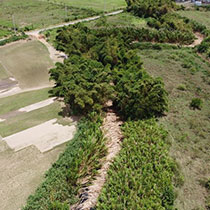
In the southwest of Puerto Rico, not far from the small town of Hormigueros, a startup called Bio Restorative Ideas plans to convert bamboo to biochar on the site of a former sugar cane factory.
Bamboo is a rapidly growing grass and when fallen and broken, particularly along waterways and roadways, causes blockages, flooding and erosion.
Enhanced Rock Weathering
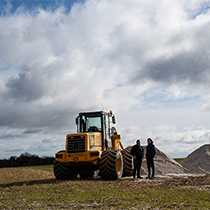
Silicate Carbon Limited (Silicate) is based in Ireland. Their business purpose is to permanently remove carbon dioxide from the atmosphere through the technique of Enhanced Rock Weathering. Silicate’s process involves grinding primarily returned concrete to a fine powder and then spreading this material to agricultural land. Using this material for ERW purposes is an effective use of a waste product that has an abundant supply. It also has a range of other benefits beyond carbon removal as the material has the capability to improve soil fertility and health by adding essential nutrients and regulating pH levels, which enhances crop growth and water retention. This process also supports plant resistance to pests and diseases, reducing the need for synthetic fertilizers, and prevents soil erosion. Additionally, ERW can mitigate ocean acidification by increasing water alkalinity and immobilize heavy metals, reducing their toxicity. These benefits collectively promote sustainable land management, enhance biodiversity, and contribute to overall benefits for people and planet.
Micro-algae to biochar
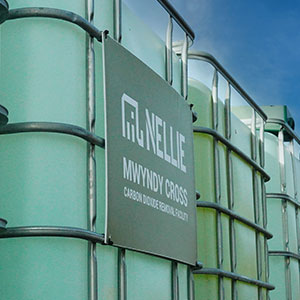
Nellie Technologies Limited (Nellie) is based in Wales UK. Their business purpose is to permanently remove carbon dioxide from the atmosphere by creating a biochar from micro-algae. Nellie have developed proprietary technology to rapidly and efficiently grow micro-algae in a photobioreactor. Once grown the micro-algae can be collected, dried and then used to create biochar which is then applied to agricultural land as a soil amendment. The advantage of Nellie’s approach is the novel use of micro-algae as a feedstock for biochar production which grows rapidly and can be harvested more frequently than conventional biomass sources, micro-algae also has potential to produce higher yields of biochar compared to traditional biomass and does not compete with food crops for arable land since it can be carried out on so called ‘grey belt’ land.
Carbonated building materials
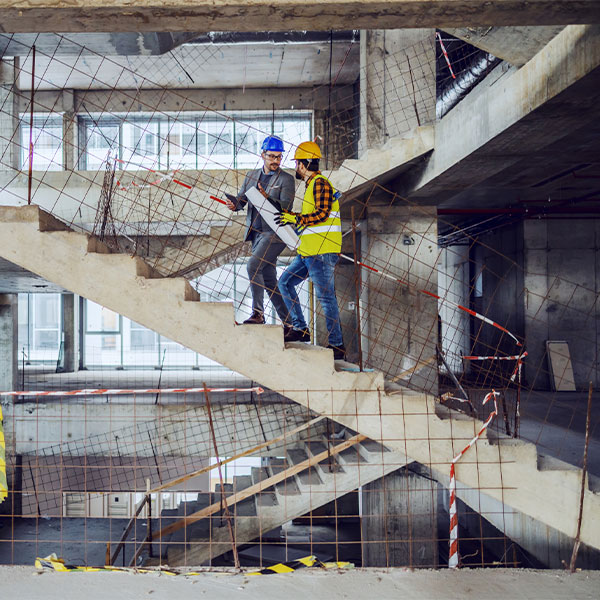
O.C.O Technology Group Limited (OCO) is based in England, UK. Their business specializes in carbon removal through the production of carbon-negative building materials. Their process transforms Air Pollution Control Residue (APCr)—a potentially hazardous industrial by-product that is typically landfilled—into durable construction aggregates. The carbonation process uses some biogenic CO₂, principally sourced from agricultural waste from a local farm, but the majority of carbon removal is achieved during a curing phase in which the aggregates absorb atmospheric CO₂ directly from the surrounding air. The captured carbon is then permanently stored within the building materials.
This approach delivers multiple benefits for climate and society. It supports circular economy principles by repurposing industrial waste and reducing demand for conventional raw materials. Additionally, converting APCr into stable building products reduces the risks associated with landfilling hazardous waste, contributing to safer waste management and safeguarding communities against pollution risks.
Direct Air Capture
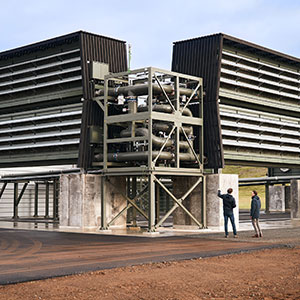
Climeworks is a Swiss company that empowers people and companies to fight global warming by offering carbon dioxide removal as a service via direct air capture (DAC) technology. At Orca, Climeworks’ DAC facility in Iceland, the CO2 is permanently removed from the air by capturing and geologically storing it for thousands of years with Climeworks’ storage partner Carbfix.
Climeworks’ DAC facilities run exclusively on clean energy, and their modular CO2 collectors can be stacked to build machines of any capacity. Founded by engineers Christoph Gebald and Jan Wurzbacher in 2009, Climeworks is on a journey to climate impact at scale. To do so, it strives to inspire 1 billion people to act and remove CO2 from the air.
Agroforestry

Trees for Global Benefits (TGB) is a long-running carbon removal project in Uganda implemented by the Environmental Conservation Trust of Uganda (ECOTRUST), a not-for-profit conservation organization established in Uganda in 1999 to conserve biological diversity and enhance social welfare by promoting innovative and sustainable environmental management. TGB combines community-led activities to increase carbon sequestration, encourage sustainable land-use practices, and provide farmers with performance-based payments.
TGB combines carbon sequestration with rural livelihood improvements through small-scale, farmer-led, agroforestry projects and ecosystem services. In addition to farmers’ direct payments for planting trees and climate mitigation, the project contributes to income stability, food security, and fuel security at community level.
Mangrove restoration
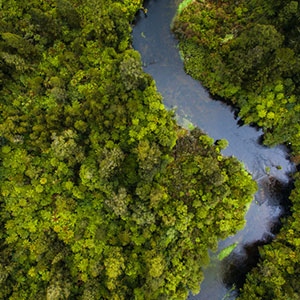
The Delta Blue Carbon Project is a significant mangrove restoration initiative aimed at restoring and conserving mangrove forests in the Indus River Delta of Pakistan. This large-scale project is operated as a private public partnership between Indus Delta Capital and The Forest and Wildlife Department of Government of Sindh and successfully combines environmental restoration with sustainable development and climate resilience.
How we evaluate projects
Certificates are sourced through established standards - such as Puro.earth (CORCs), Plan Vivo (PVCs), and Verra (VCUs) - and are retired to ensure each claim is unique and credible. Where projects fall outside existing certification schemes, we require strong scientific credentials including independent life cycle analysis.
Outlook
We aim to be transparent about how we select and monitor carbon removal solutions, and we regularly review our criteria. By sharing this information, we hope to encourage other companies to move beyond carbon neutrality, to take early action in the permanent carbon removal market that genuine net-zero demands.
1 Zurich’s operational emissions footprint boundary has changed over time. Zurich Cover-More, our joint ventures with Banco Sabadell and Banco Santander, smaller businesses like Real Garant and Orion, were not historically part of our operational emissions footprint. Since 2024, we have included CO2e for these businesses, as well as our new acquisitions, in our offsetting activities. Farmers Group, Inc. and its subsidiaries, are out of scope of our offsetting activities.