




two women in a meeting

Sustainability highlights 2024

During 2024 we progressed toward our ambitions and targets, selected highlights

Sustainability report image

Selected 2024 sustainability highlights

We highlight some of the sustainability actions and outcomes that we have accomplished in 2024.

  • Nellie - Carbon Dioxide Removal Facility

    Turning to algae to achieve net-zero

    Zurich has signed a pre-payment contract with a company in Wales which grows microalgae to remove carbon dioxide from the atmosphere.

    Read story
  • People illustration

    Transforming lives and supply chain

    Zurich Brazil accelerated the transformation of its supply chain in 2024 through the Transformar Program.

    Read story
  • Person with a graph illustration

    Helping suppliers transition to net-zero

    In 2024, Zurich supplier DelphianLogic - an award-winning provider of custom learning solutions - used our tools and resources to measure its carbon dioxide emissions for the first time and set science-based emission reduction targets, approved by the Science Based Targets initiative.

    Read story
  • Aribau 195

    Aribau 195 Real Estate Project

    The Aribau 195 project is a significant refurbishment initiative aimed at transforming an office building in Barcelona’s Ensanche district, focusing on sustainability and ESG criteria.

    Read story
Carbon Dioxide Removal Facility

Turning to algae to achieve net-zero

Nellie, which is based in Aberystwyth, grows the algae in a specially designed photobioreactor. It is then dried and turned into biochar, a very stable form of carbon which can be stored in the soil for hundreds and even thousands of years.

This is one of several agreements that Zurich has with early stage, but highly promising, carbon-removal suppliers as part of its strategy to balance out its unavoidable remaining emissions once it has reduced its emissions as much as possible.

Over a year, Nellie’s bioreactor array can produce around 64 tons of dried algae which has so far removed 115 tons of carbon dioxide from the atmosphere. The company ends up with about 40 tons of biochar which is sold to local farmers as a fertilizer and soil additive. The system is modular, scalable and can be deployed elsewhere.

Zurich’s pre-payments against future carbon removal certificates that Nellie aims to produce, will help fund the scale-up of the business and support Nellie to progress toward their goal of removing up to 100,000 tons of carbon dioxide from the atmosphere each year by 2030. Further payments will be made as the company meets certain milestones.

Zurich aims for net-zero in its own operations by 2030. That will only be achieved after reducing emissions by 70 percent, compared to 2019 levels, and then by purchasing carbon removal certificates in the amount equivalent to our remaining emissions.

People illustration

Transforming lives and supply chain

This program aims to:

  • Increase the inclusion of social and diverse resources within supplier contracts.
  • Empower and recognize good ESG practices in suppliers.

In January 2024, for example, Zurich Brazil initiated a new contract with the supplier Sodexo. Sodexo prioritizes diversity, equity and inclusion for its employees and one of its facilities management teams is composed entirely of individuals in socially vulnerable situations, including women who have experienced domestic violence, and refugees.

To help develop their self-esteem and skills, Zurich Brazil conducted several workshops with Sodexo in September and October 2024, covering topics such as self-awareness, personal image/style consulting, self-makeup, and financial education.

In terms of empowering and recognizing suppliers for good ESG practices, Zurich Brazil also conducted workshops focused on developing governance in sustainability and information security. About 100 companies participated in these workshops.

Person with a graph illustration

Helping suppliers transition to net-zero

Zurich provides climate training materials and teamed up with carbon accounting firm Normative to offer free access to the Business Carbon Calculator so that suppliers can calculate their carbon footprint.

This engagement reflects Zurich’s ambition to become a net-zero emissions business and to cascade climate action across the supply chain.

“The first step to reducing emissions is calculating them,” said DelphianLogic CEO and co-founder, Saurabh Ganguli. “By providing access to the Business Carbon Calculator, Zurich has not only empowered us to advance our sustainable business practices but has also reinforced our resolve to make a meaningful impact on the environment.”

Zurich targets for 75 percent of its managed procurement spend1 to be with suppliers that have science-based emission reduction targets by 2025 and net-zero targets by 2030.

1 The spend of approximately USD 2 billion annually managed by Zurich’s Procurement and Vendor Management function on goods and services that are required to enable Zurich to maintain and develop its operations.

Aribau 195

Aribau 195 Real Estate Project

Aligning with Zurich goals to reduce carbon footprints and create more liveable urban spaces, the project modernizes the building while respecting Barcelona’s architectural heritage.

It won the AEO (Spanish Association of Offices) award for the best renovation project in Spain in November 2024. Integrating nature into urban spaces, it offers 8,300 square meters of office space and 1,000 square meters of landscaped exteriors. The project has been awarded LEED Platinum and seeks WELL Gold certification, emphasizing its dedication to environmental sustainability and human wellbeing.

A key aspect of Aribau 195 is the extensive use of the existing structure, retaining over 80 percent of the original building to reduce waste and conserve resources.

The redesign incorporates prefabricated concrete elements, and modular lattice panels to improve thermal and acoustic performance, aligning with sustainable building practices.

Green roofs, terraces and an interior garden increase urban biodiversity and provide ecological benefits while facilities for electric vehicle charging and ample bicycle parking promote sustainable transportation.

A Building Information Modeling system optimizes resources and ensures efficient construction and operation. Relying solely on renewable energy sources, the project supports the European Union’s decarbonization goals.

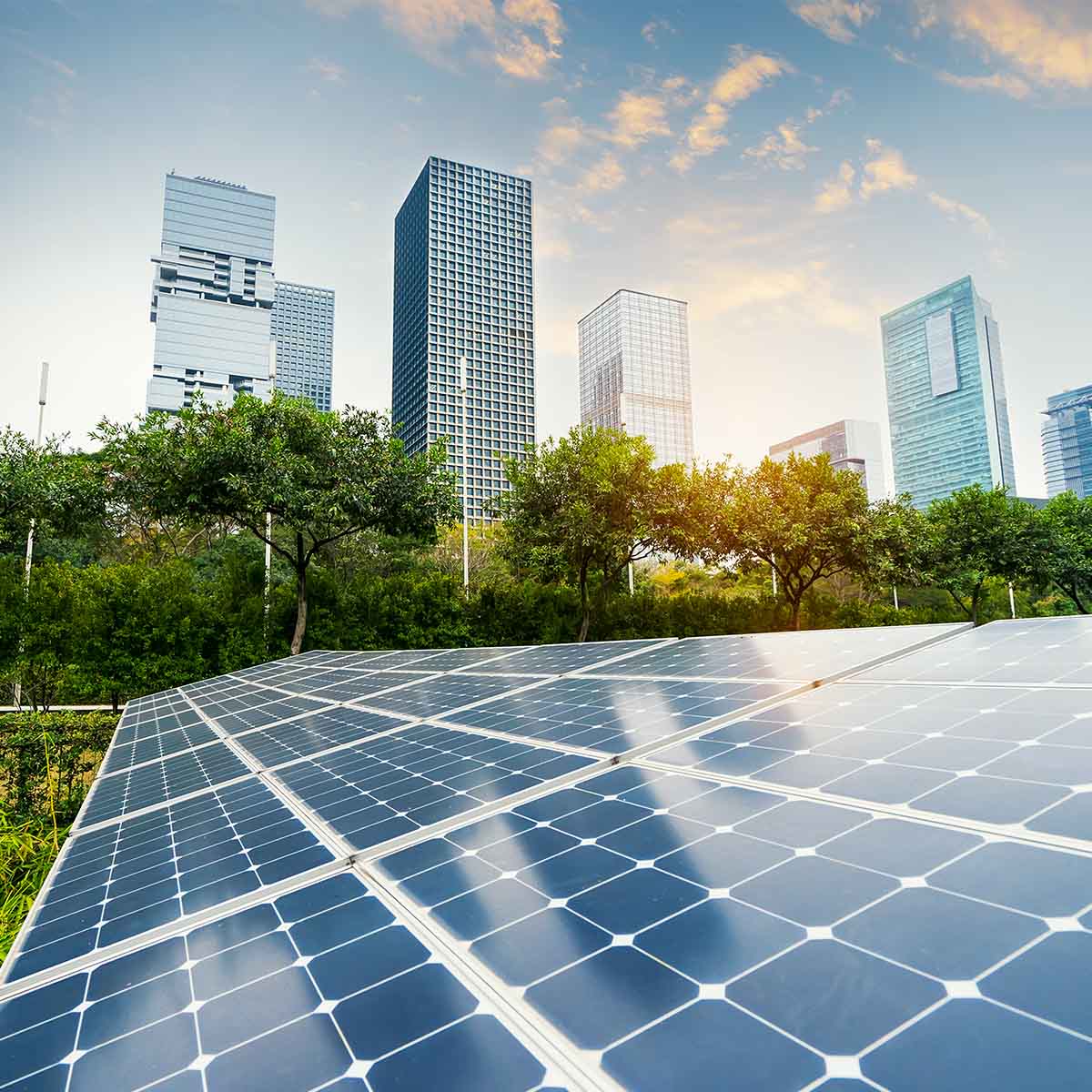
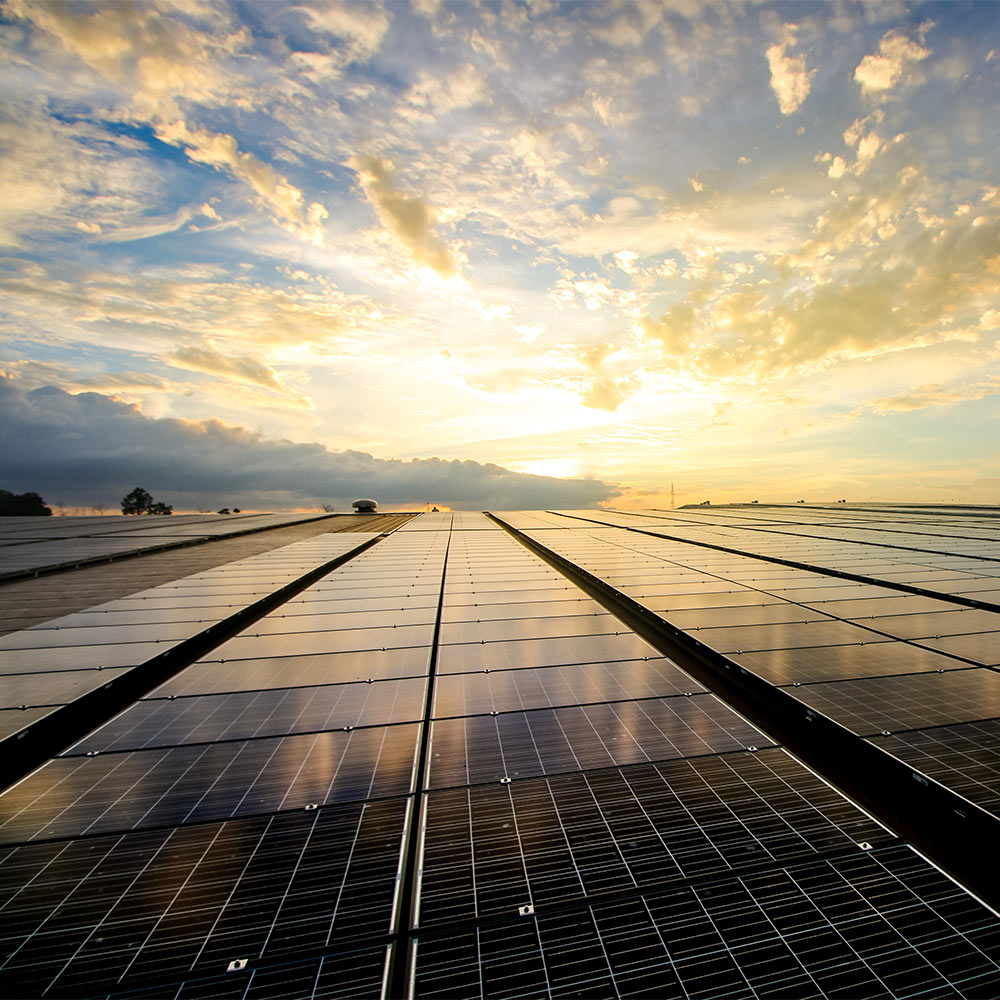
Sunset reflection on solar panels

Harnessing the Sun: Infrastructure Debt Investment in a Spanish Solar Park

Zurich is dedicated to achieving net-zero in its investment portfolios by 2050. To support this goal, we have established intermediate targets for 20301. Supporting companies to finance their transition, Zurich invests in a variety of climate solutions through impact investment assets worldwide. Following the Global Impact Investment Network's (GIIN) definition of impact investing, Zurich seeks investment opportunities that intentionally aim for specific positive social or environmental outcomes and enable the measurement of the achieved impact. These investments are designed to generate a market-rate financial return that aligns with their associated risk.

Private infrastructure debt investments as an asset class are suited to impact investing and climate solutions investment particularly: By investing in infrastructure, impact investors can achieve a dual objective of generating financial returns while contributing to positive social and environmental outcomes. An example is the transition to a low-carbon economy, which requires large investments in new infrastructure. Here, renewable energy projects can play a vital role and be easily evaluated against specific impact objectives, such as avoided CO2e emissions.

One example is Zurich's investment in a portfolio of solar parks in Spain. The 23 ground-mounted solar parks can produce 180,000 megawatt-hours (MWh) annually2 enough energy to power around 9,000 homes3, supporting the growth of Spain’s renewable energy sector and the contribution towards clean electricity generation. The solar parks are owned by a developer with extensive expertise in the renewable energy market in Spain and Italy, specialized in independent renewable energy solutions and asset management services. The developer was later acquired by an international group. The group now operates in Spain, Italy, Greece, Uruguay, USA, Colombia, Australia, and the UK. It is a long-term owner developer across onshore wind, solar photovoltaic, concentrated solar power, battery energy storage systems, and transmission line technologies.

Zurich is invested in the transaction via one of our external asset management mandates. The financing is an 18.5-year, fixed rate, amortizing senior secured loan to support the operations of the solar park. The rationale for investing in the transaction includes the attractive risk–return profile; the geographically diversified nature of the portfolio of the underlying solar energy generation assets; and the favorable regulatory environment that ensured stability of cash flows and limited exposure to electricity market price fluctuations. Moreover, Zurich’s investment in the well-established, long-term solar energy asset that facilitates the avoidance of 1,300 metric tons CO2e emissions annually, shows our dedication to the transition of the economy to a low-carbon energy model.

1 For reference, please see our Responsible Investment White Paper, available under: Responsible Investment at Zurich: What we want to achieve, and how we do it
2 Corresponding to 127 MW (megawatt) of generation capacity
3 According to internal estimations based on Greenhouse Gas Equivalencies Calculator | US EPA