
Healthcare professional discussing care plans with a patient in a clinical setting

The Value of Chronic Care

Closing the gap between life and health spans


Download the report

Cover: The value of Chronic Care

Download the full report

Explore the findings and country-level analysis behind The Value of Chronic Care 

Living longer should mean living healthier

In many countries, the gap between how long people live and how well they live is widening. Chronic diseases – hypertension, diabetes, cardiovascular disease, cancer, mental health conditions, to name a few – increasingly shape how hundreds of millions of people live, work, and plan for the future.

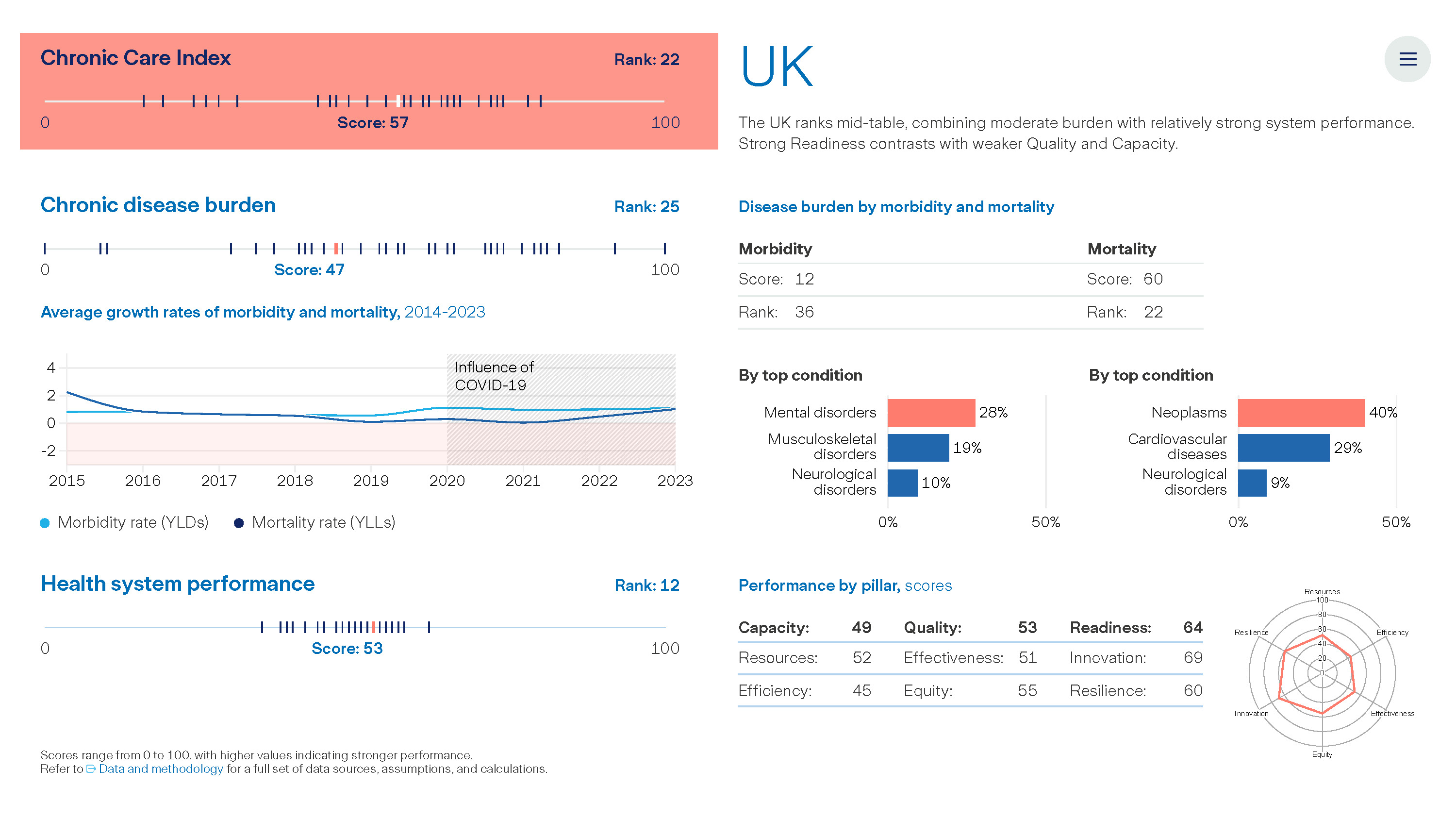
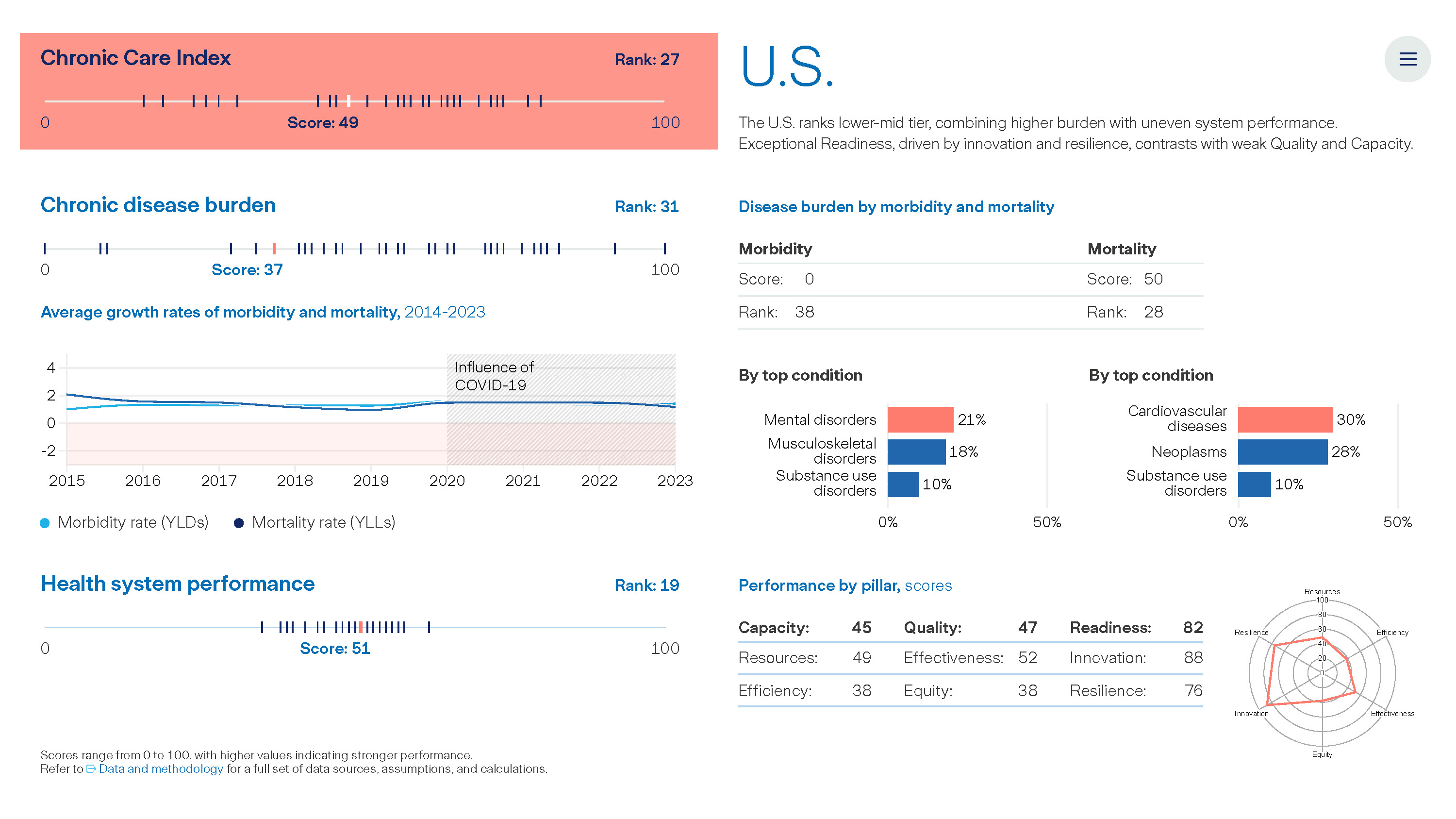
This report analyzes a decade of data for more than 200 conditions across all 38 countries of the Organization for Economic Co-operation and Development (OECD). Within the report, the Chronic Care Index brings together two distinct perspectives: the scale of chronic disease burden across populations, and how health-care systems are responding to it.


  • A farmer
     

    A widening gap between lifespans and health spans

    Chronic disease is changing in an important way. In many OECD countries, fewer people are dying young, but more are living for longer with illness, often for decades. This means more pressure on health systems and households, and a growing need for ongoing support. It also shifts the challenge from short-term events to long-duration risk – with direct implications for prevention approaches and care costs.

  • A father with his two children
     

    Quality drives comparative performance

    Capacity matters, but it does not fully explain the gap in performance. Large gaps remain in quality and readiness across countries – particularly in access, coordination, and continuity of care. This creates an access gradient that directly impacts disease outcomes: Individuals facing financial or geographical barriers delay seeking diagnosis, struggle to maintain treatment, or rely on fragmented care. And where out-of-pocket costs are high, or protection is limited, this can lead to financial insecurity.

  • Two people standing on a pier
     

    Resources alone do not guarantee outcomes

    When disease burden and system performance are viewed together, a clearer picture emerges of how well countries are positioned to manage chronic conditions. Demographics play a central role: countries with younger populations face rising pressure as populations age, while countries with older populations must find a way to maintain high performance under increasing demand. The result is two trajectories: one of prevention and preparation, and one of management.

The next opportunity: closing the chronic care gap

Chronic care is entering a new phase. As people live longer with disease and disability, outcomes will increasingly depend on how prevention, care delivery, and shared responsibility are coordinated over time.

From management to prevention

Earlier action can reduce long-term diseases. This index measures strengths, gaps, and emerging pressures to help guide better future health outcomes.

From fragmented interventions to integrated journeys

Chronic care is a multi-year journey across primary care, specialists, and employers. Better integration can pave a clearer path into care and maintain follow-ups as conditions evolve.

From system performance to shared responsibility

No single institution can manage chronic disease alone. Public systems, employers, and insurers each have a role in prevention, early detection, access to care, and long-term management.

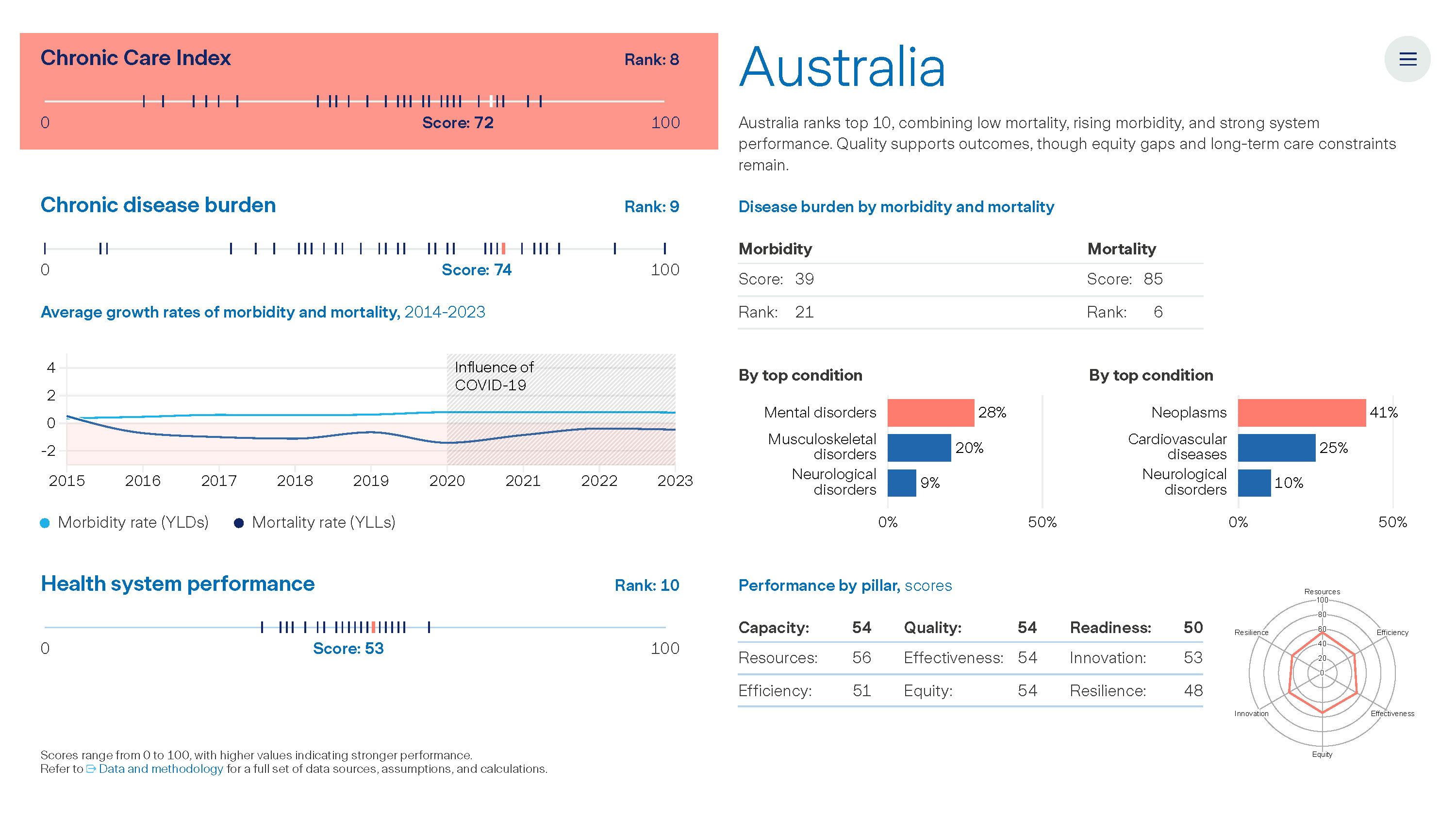
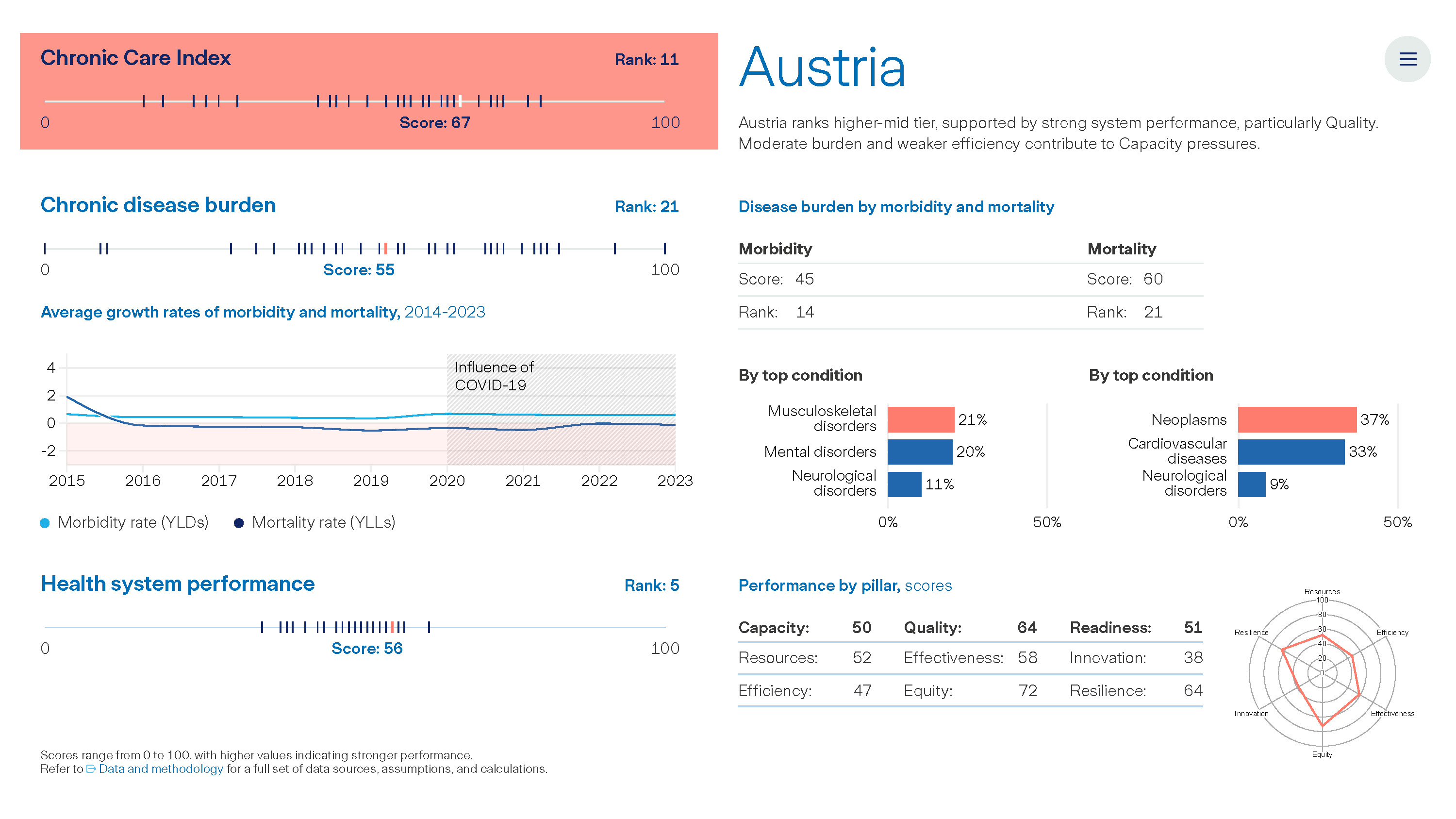
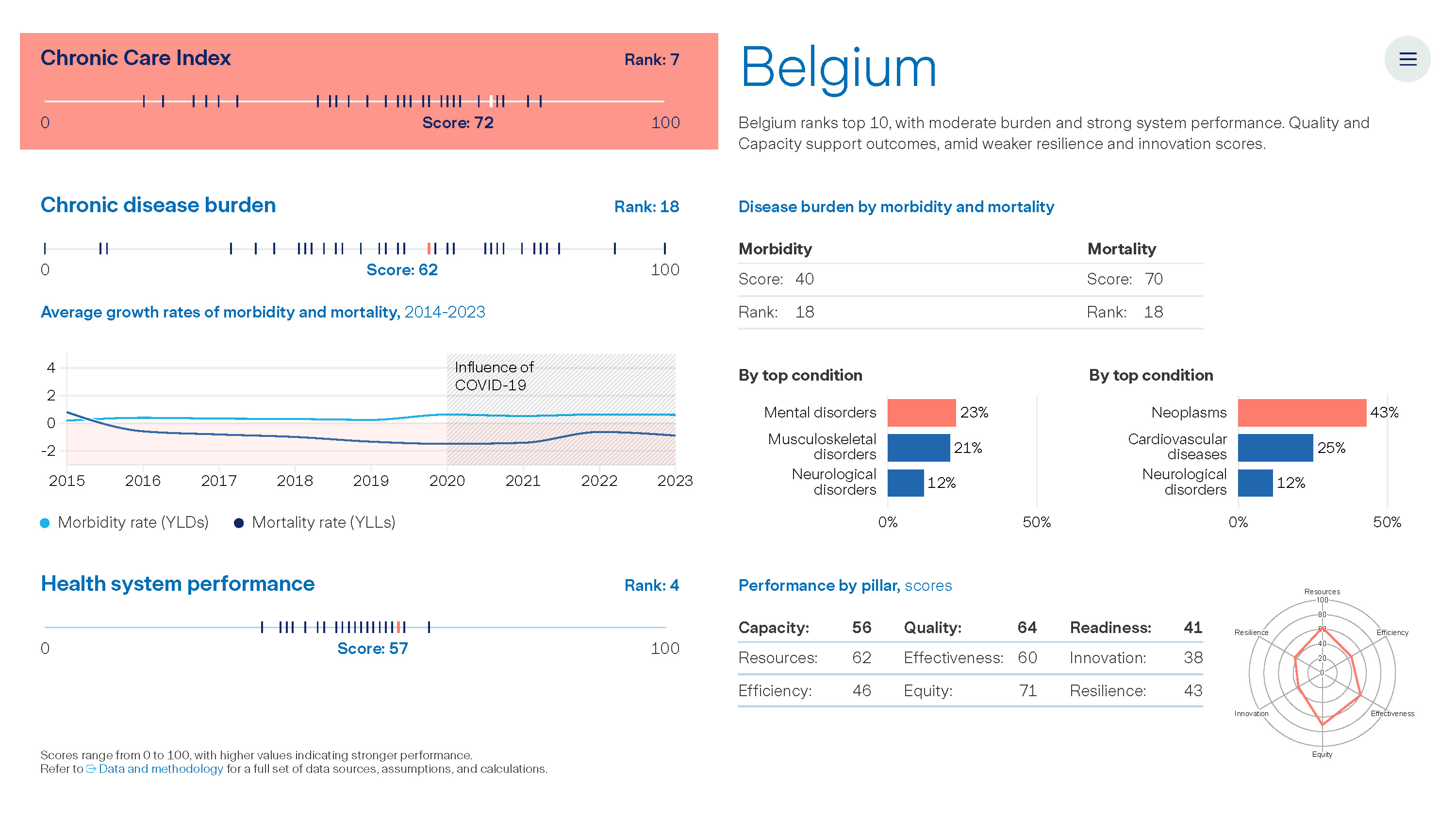
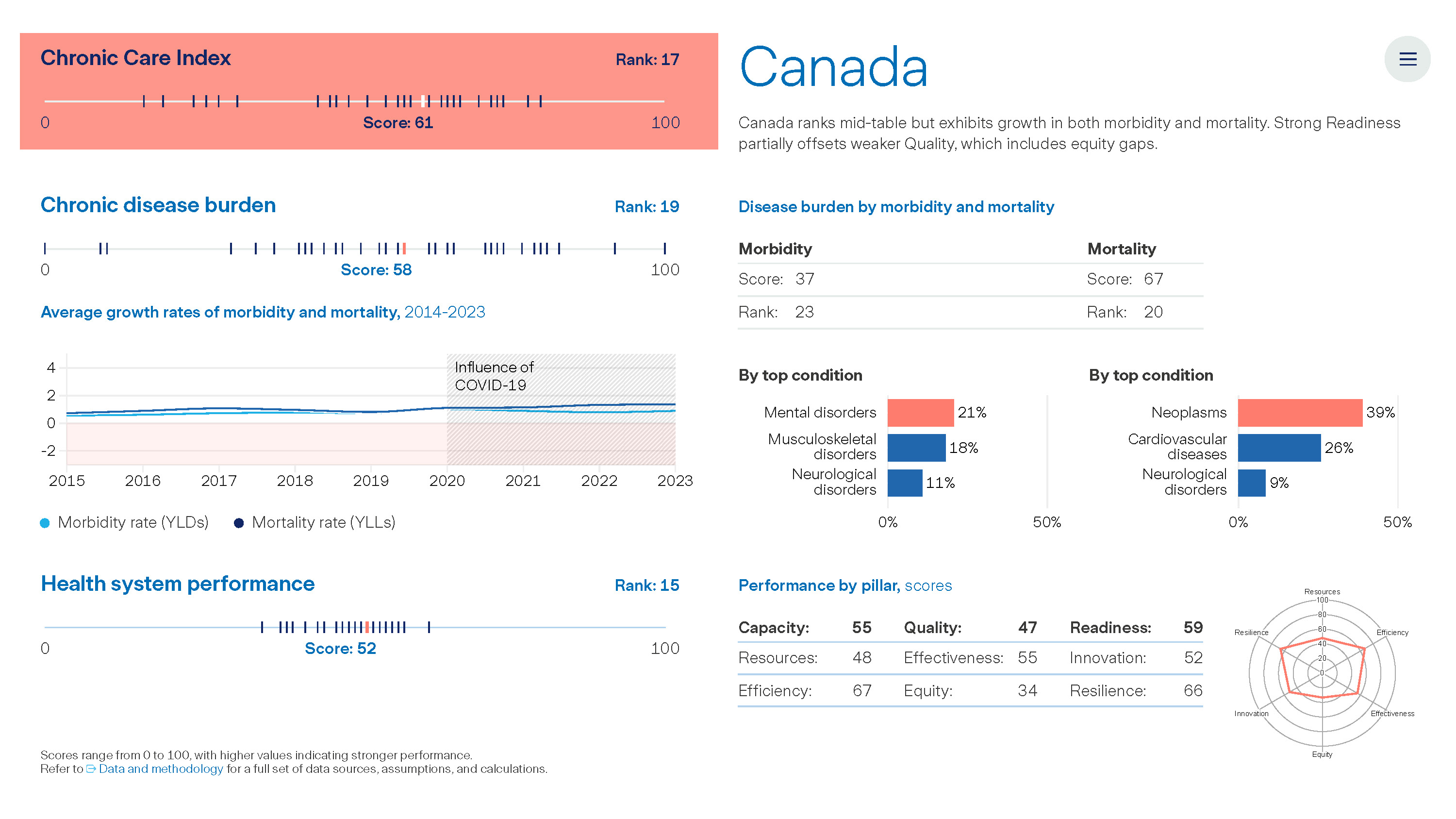
COUNTRY PAGES

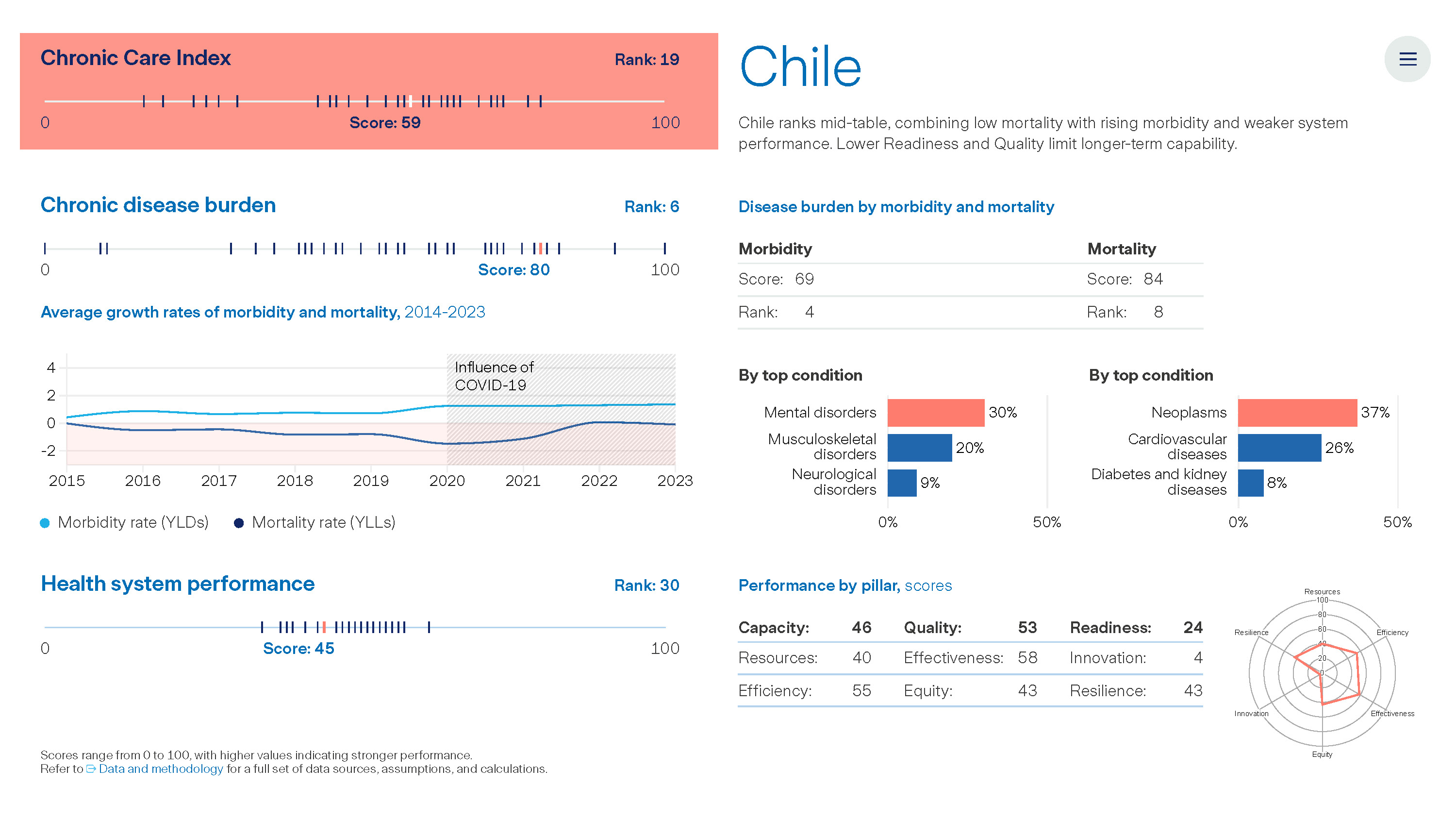
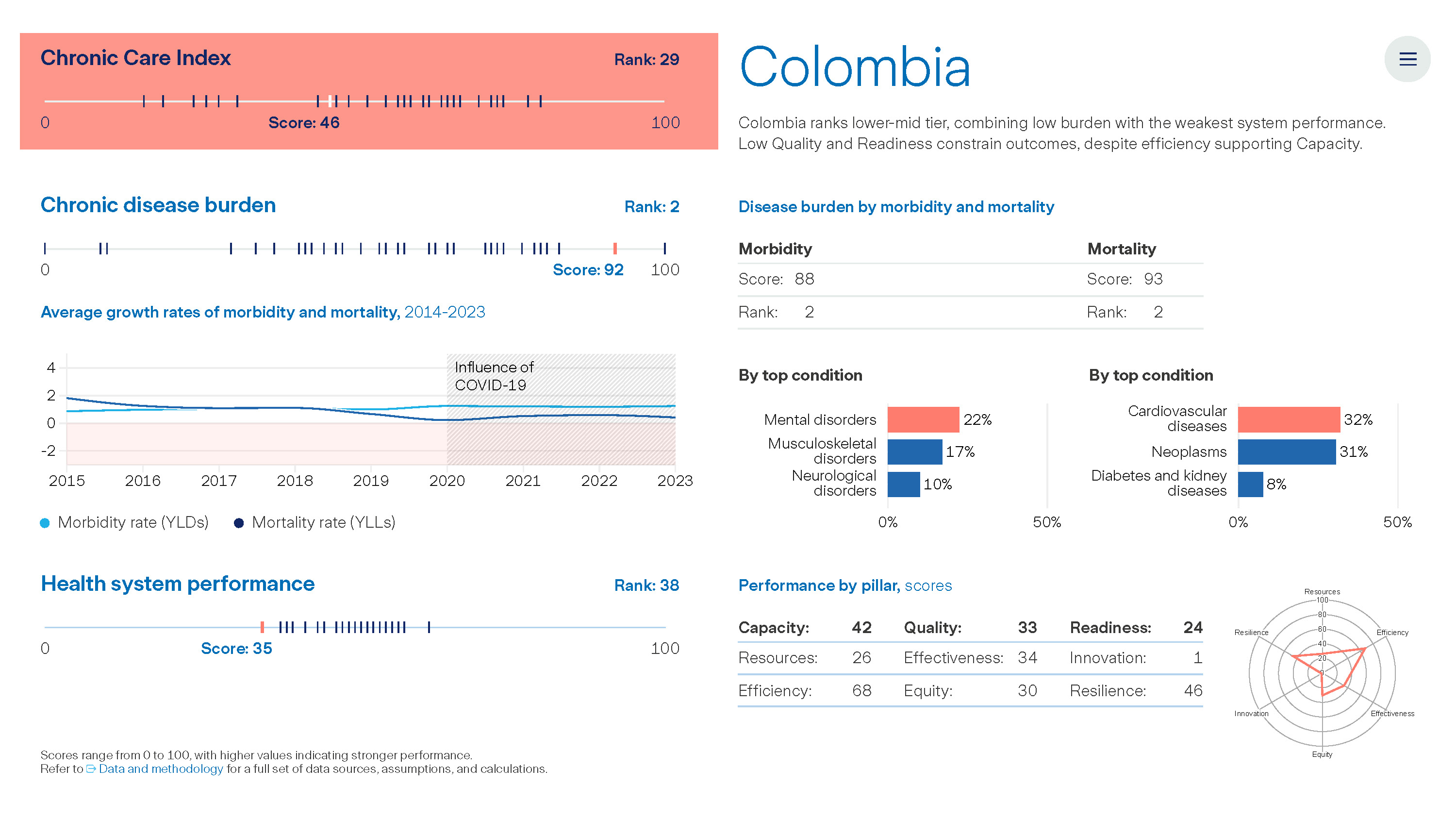
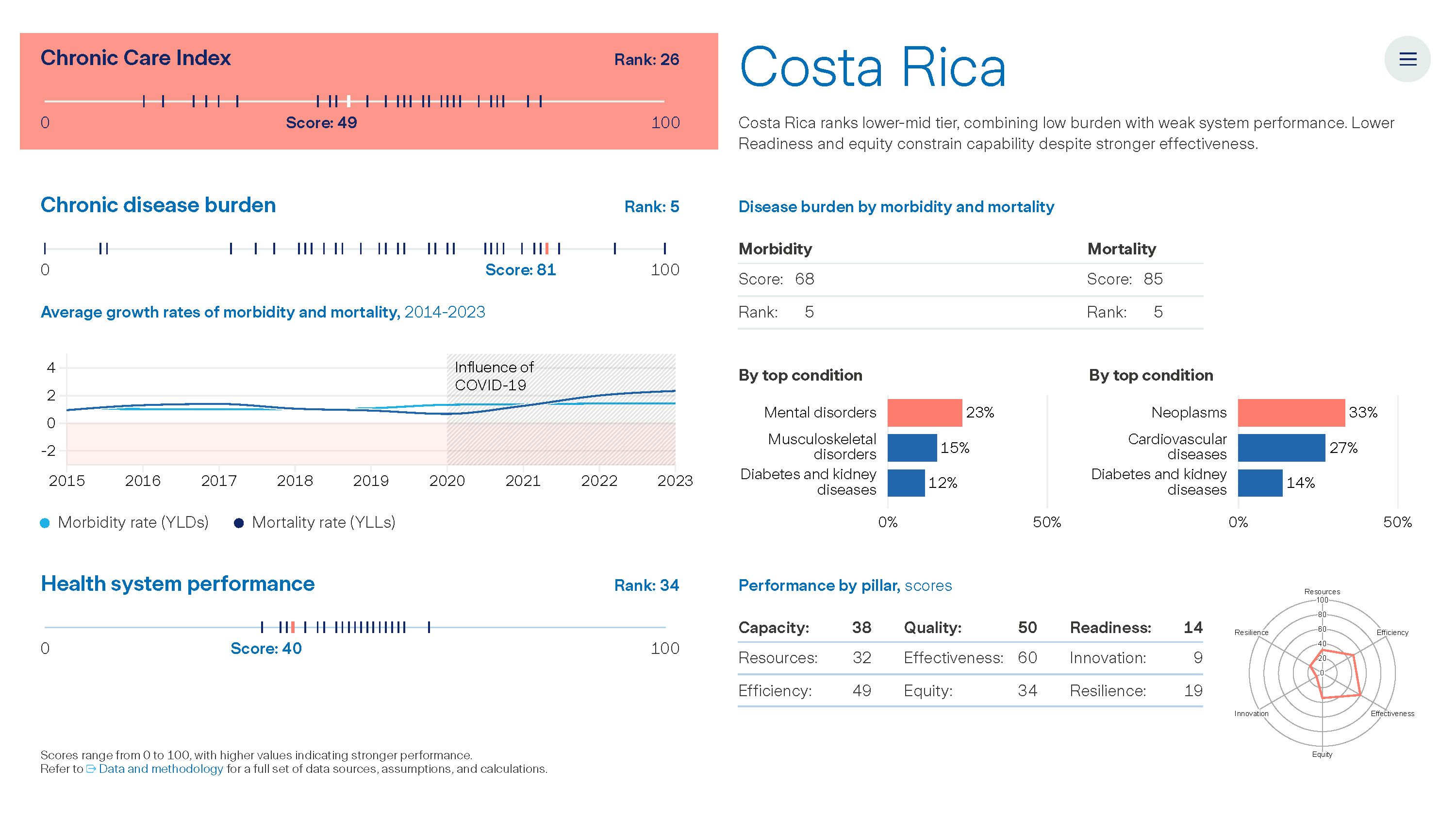
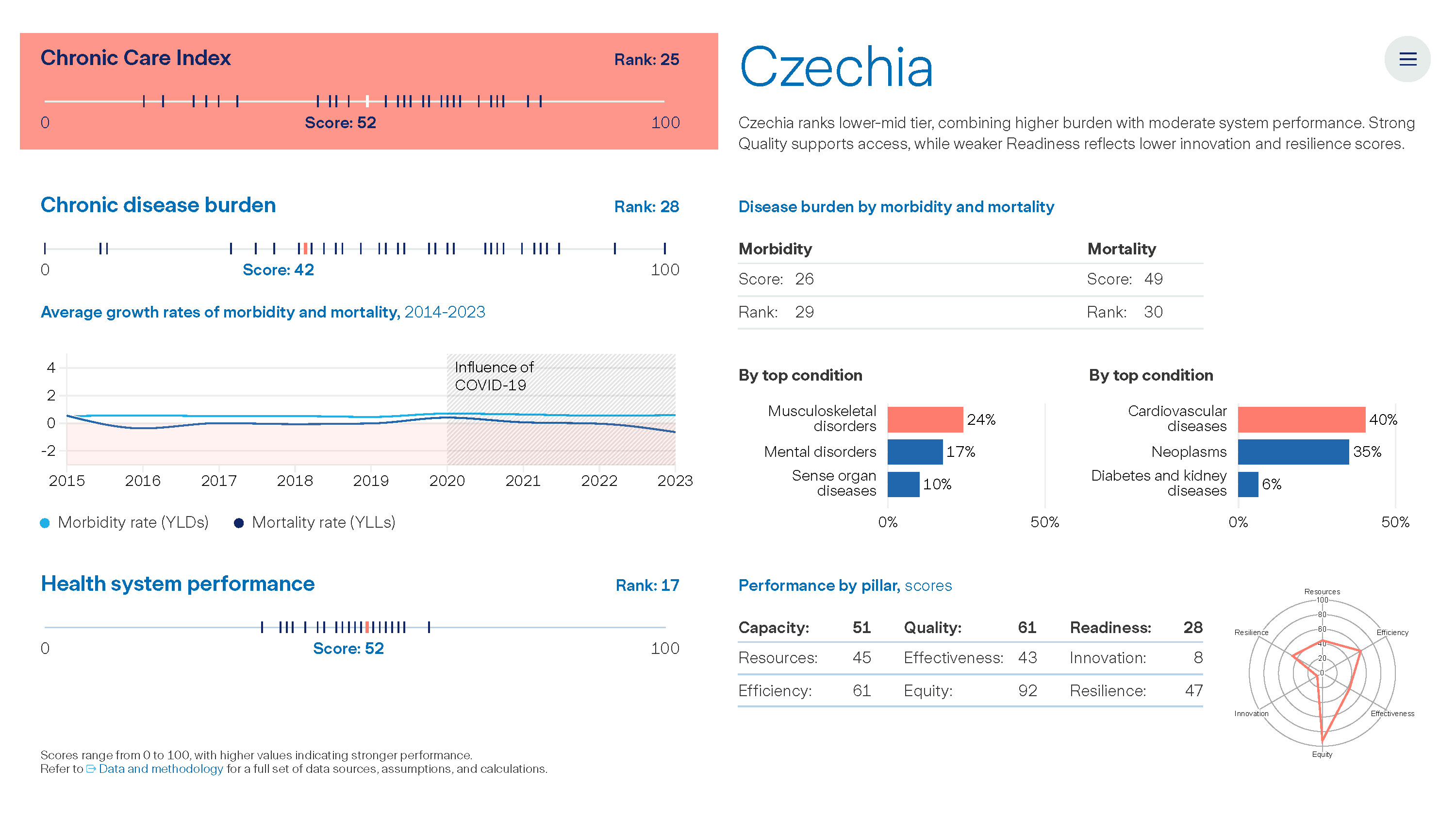
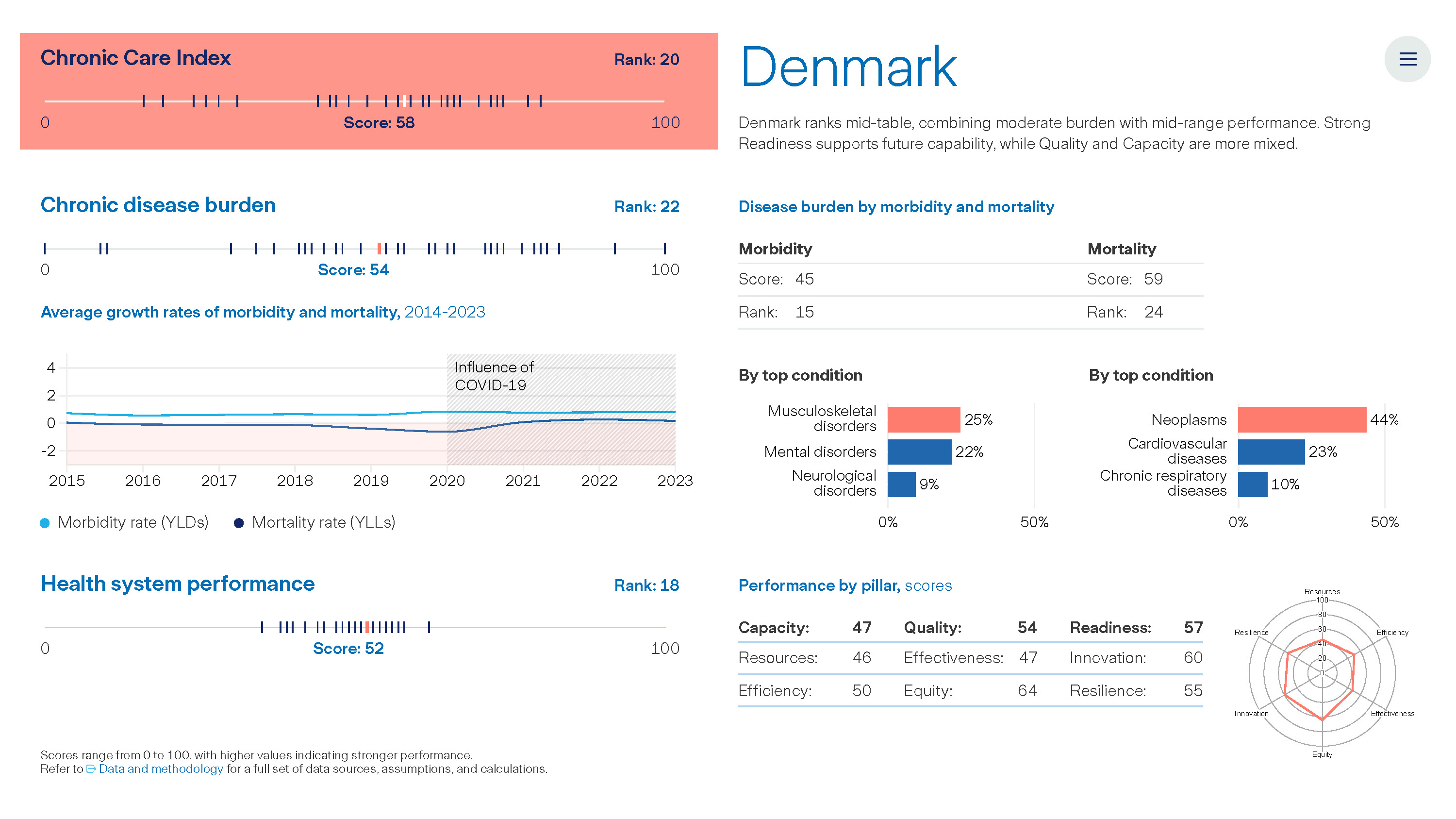
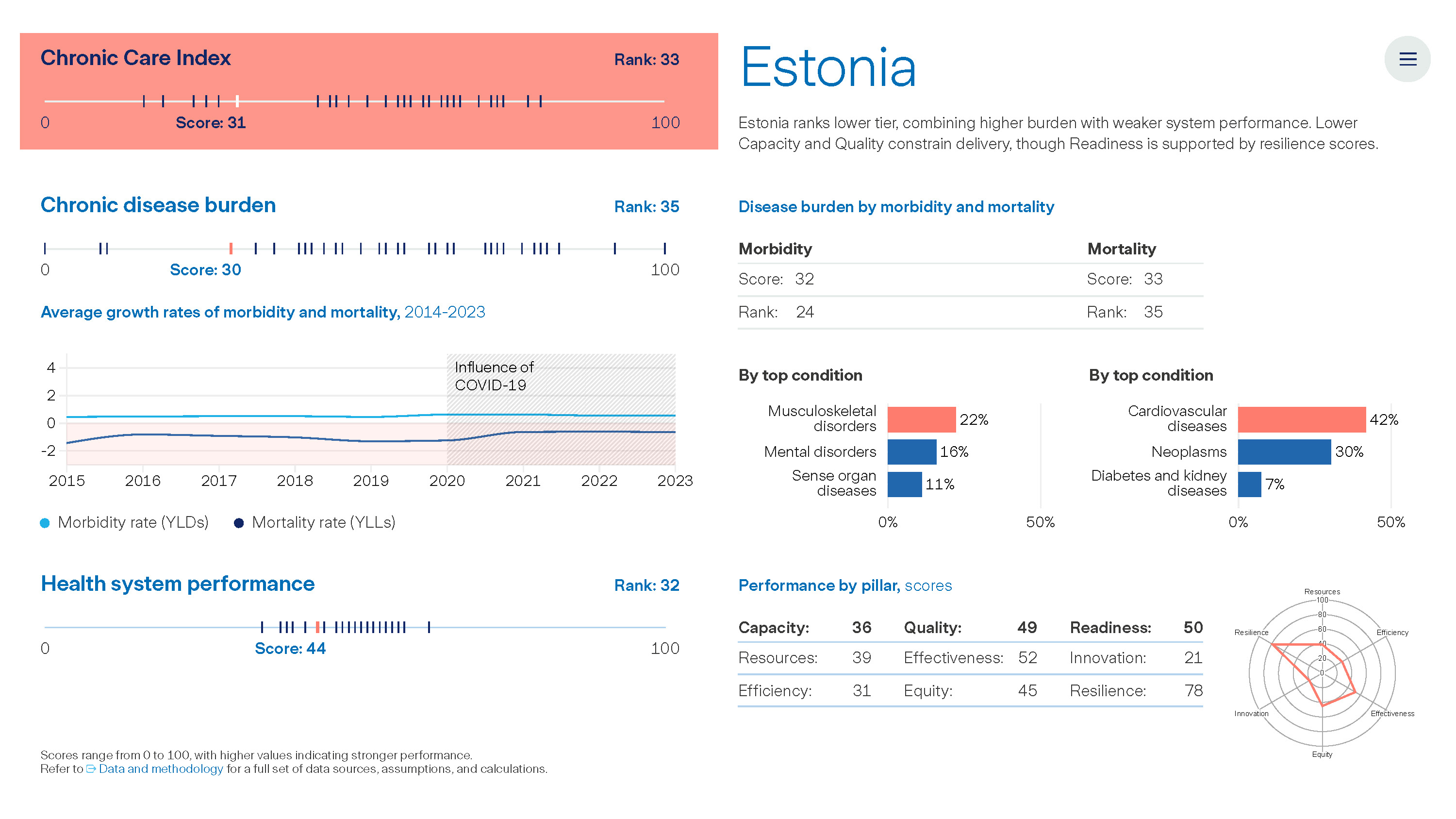
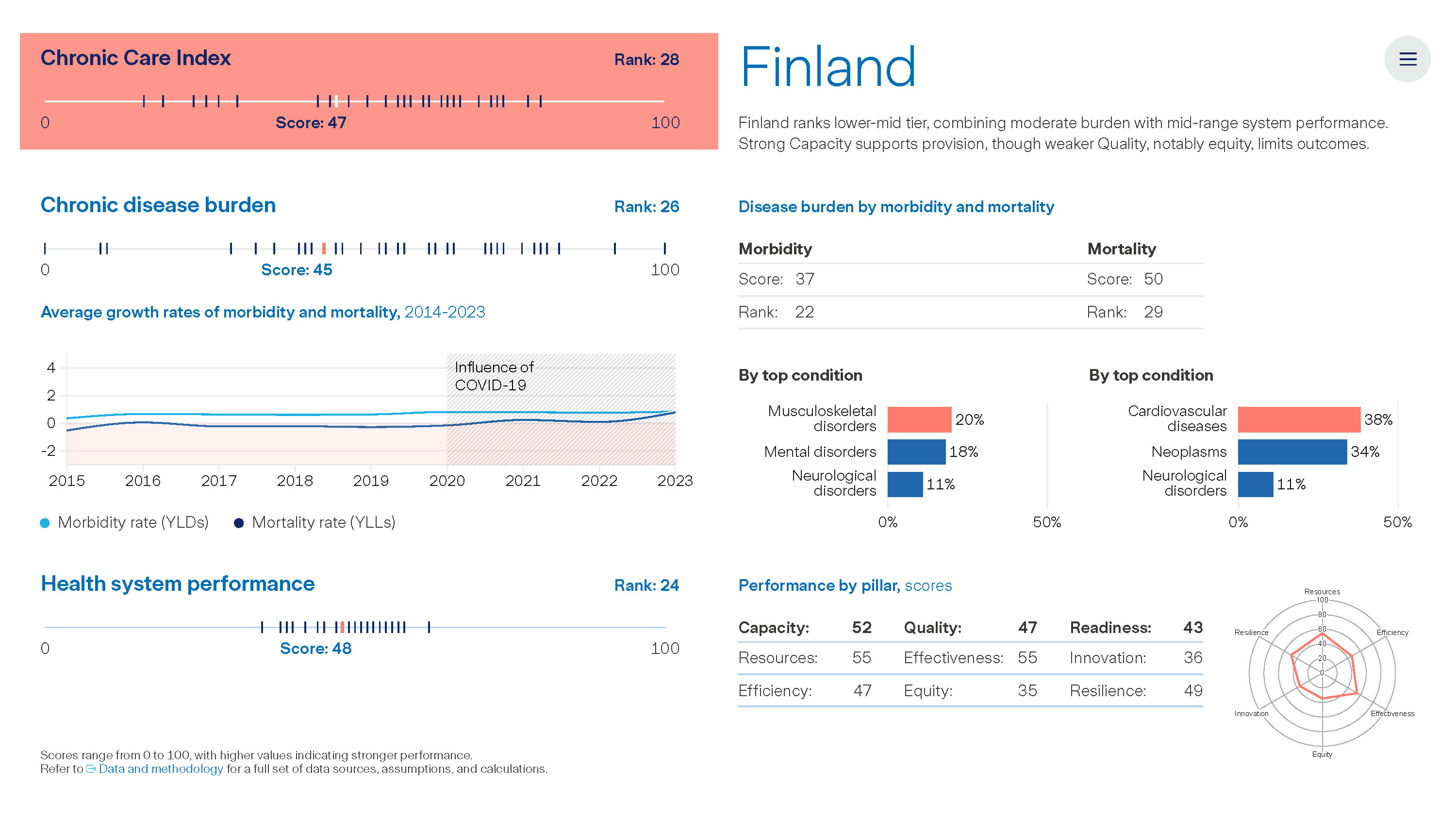
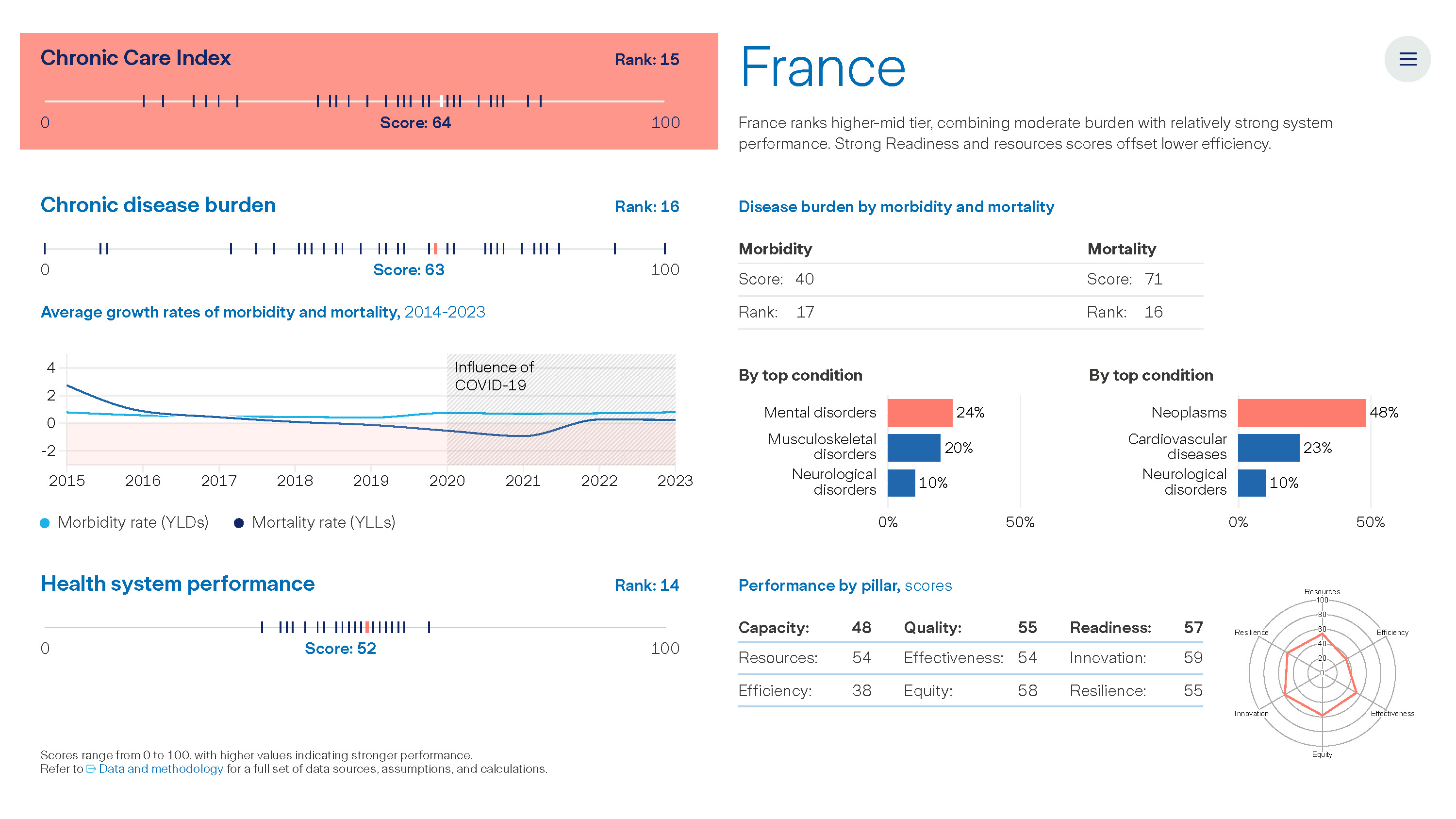
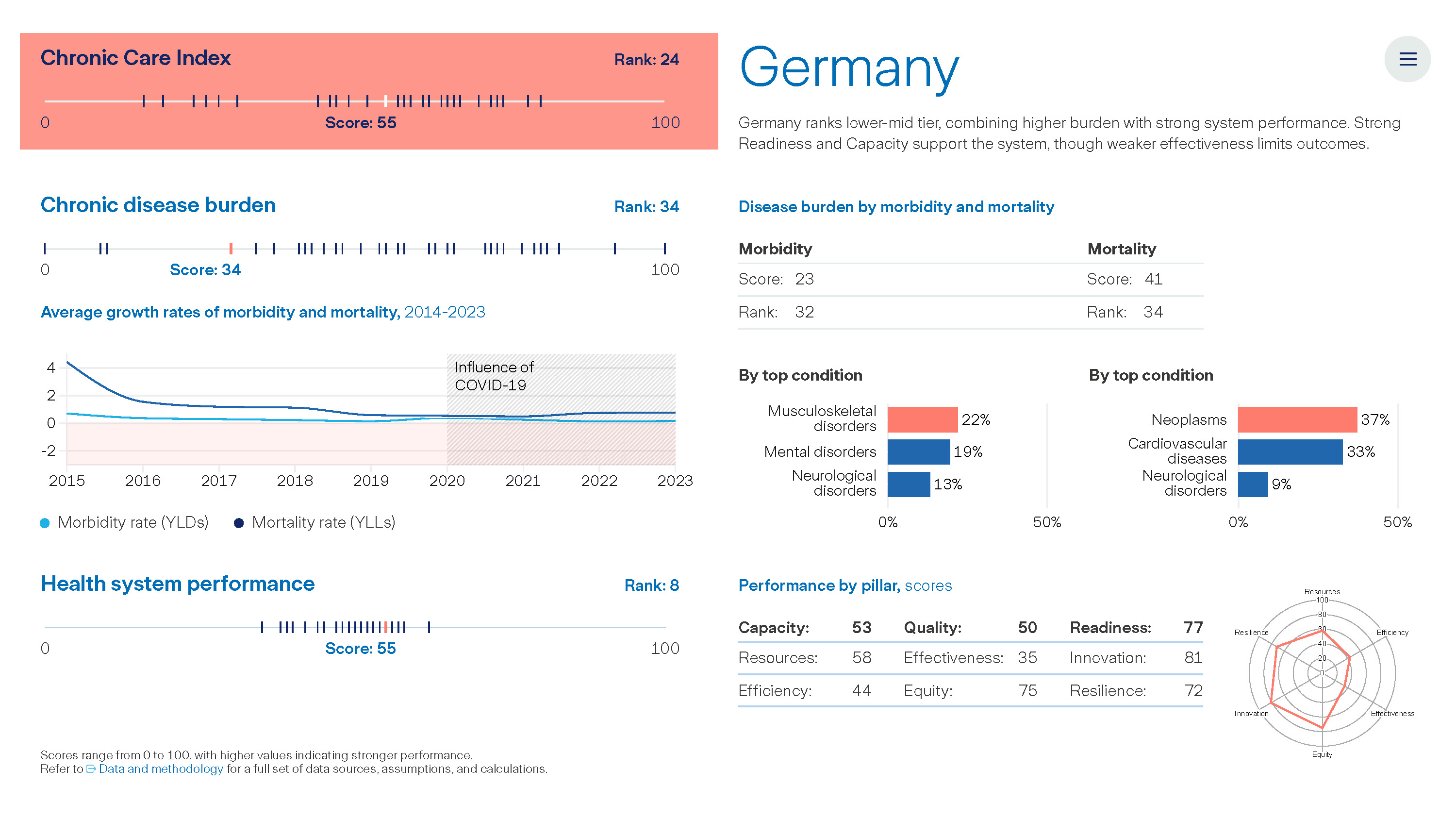
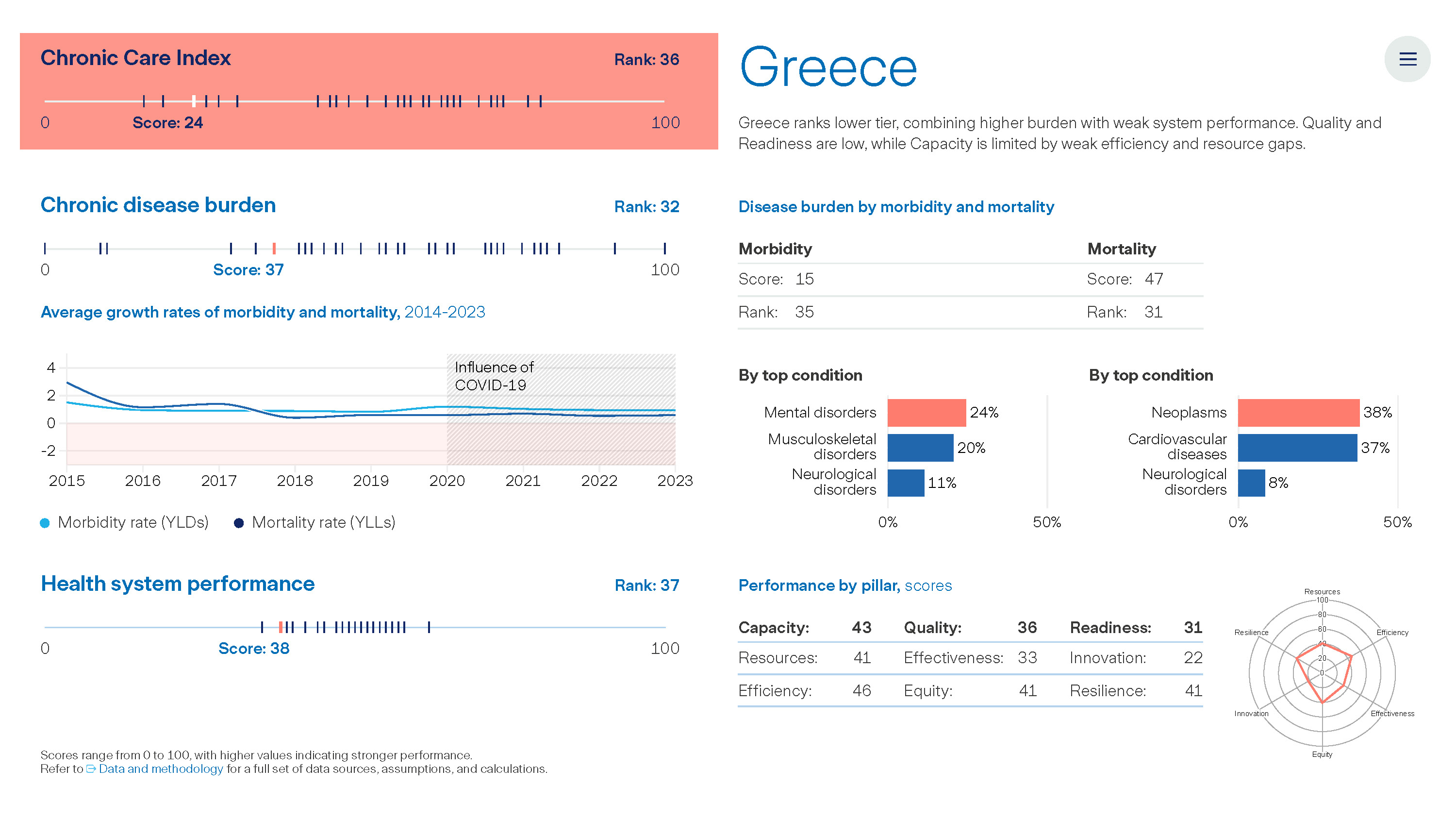
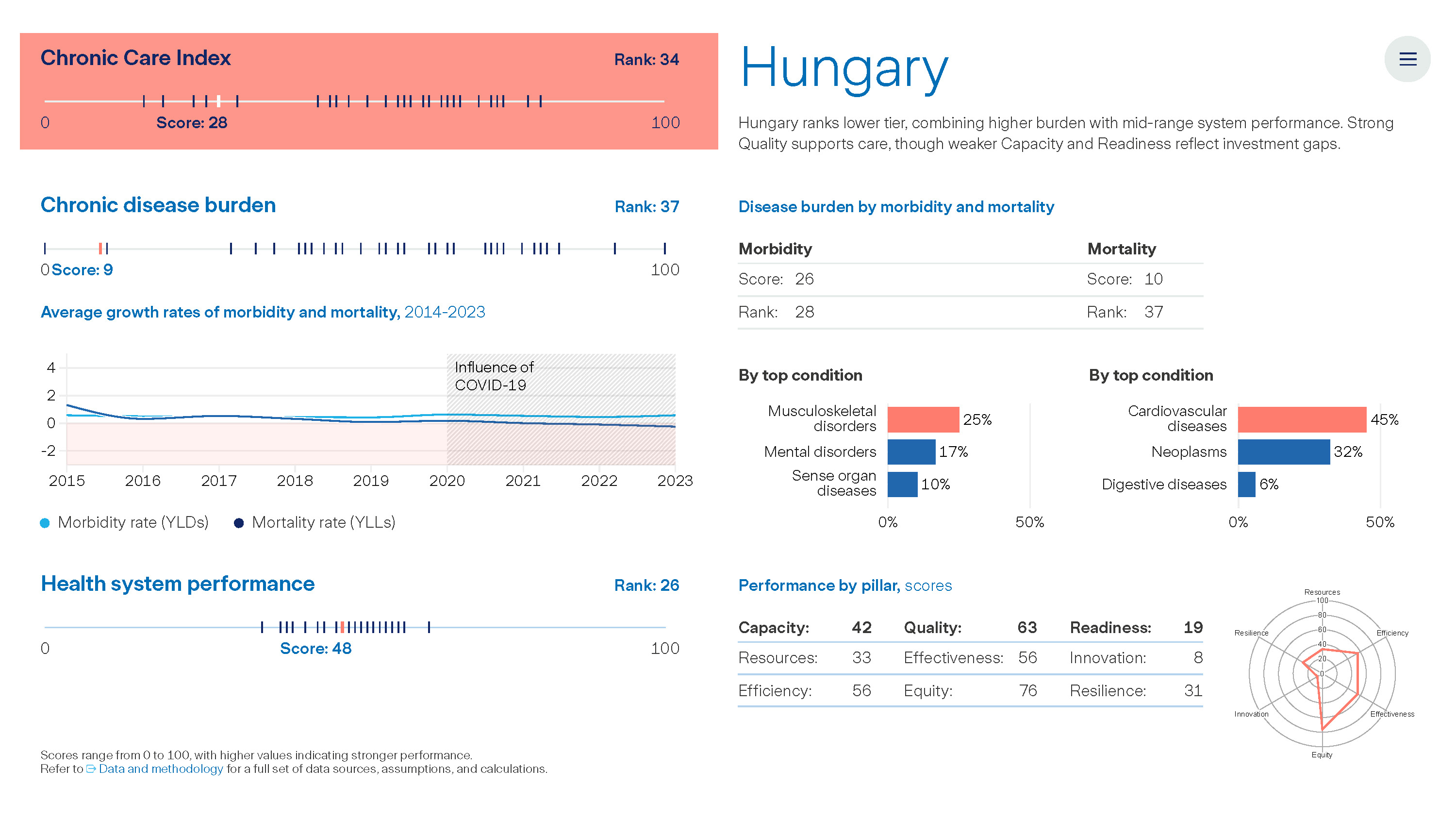
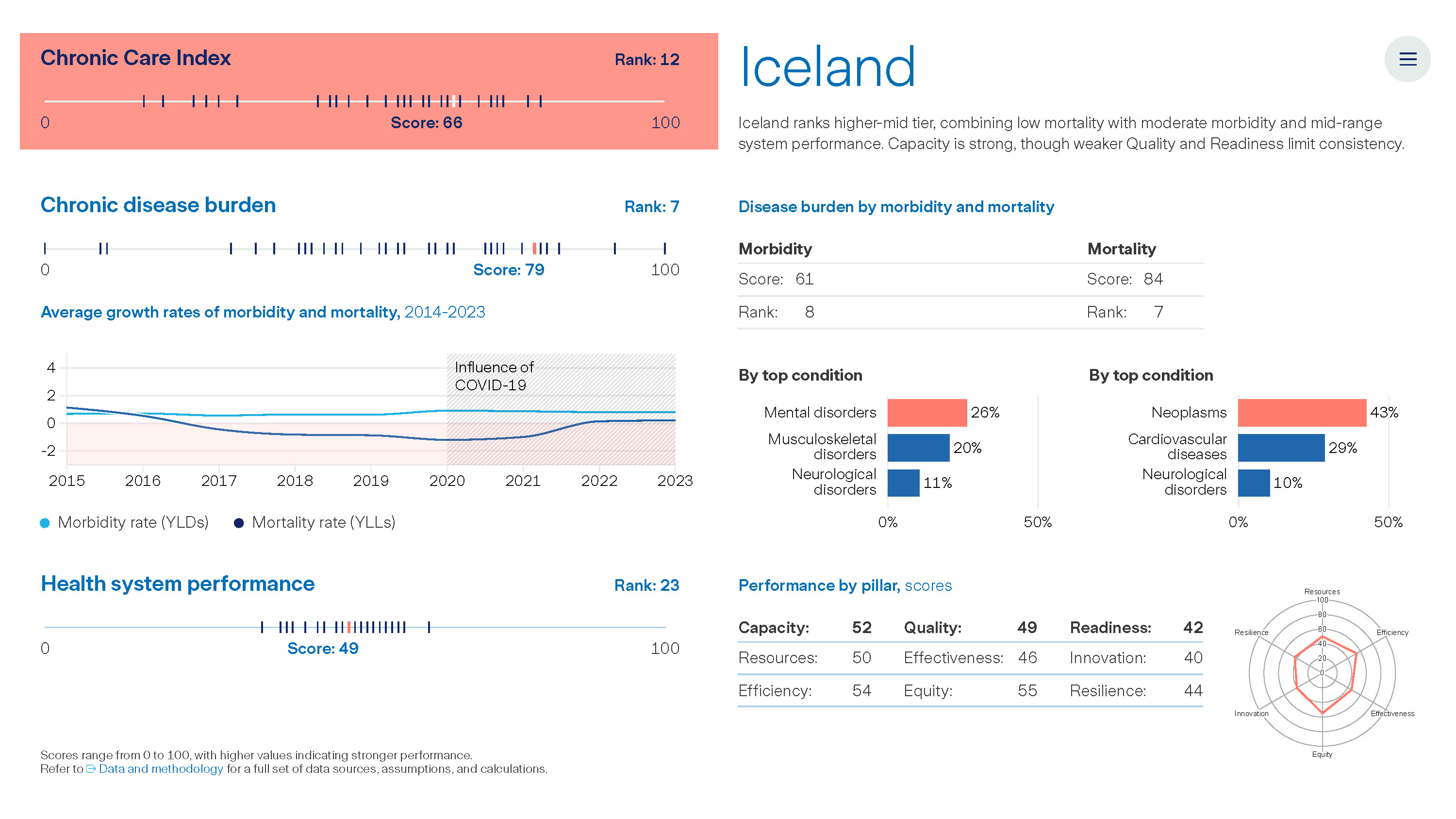
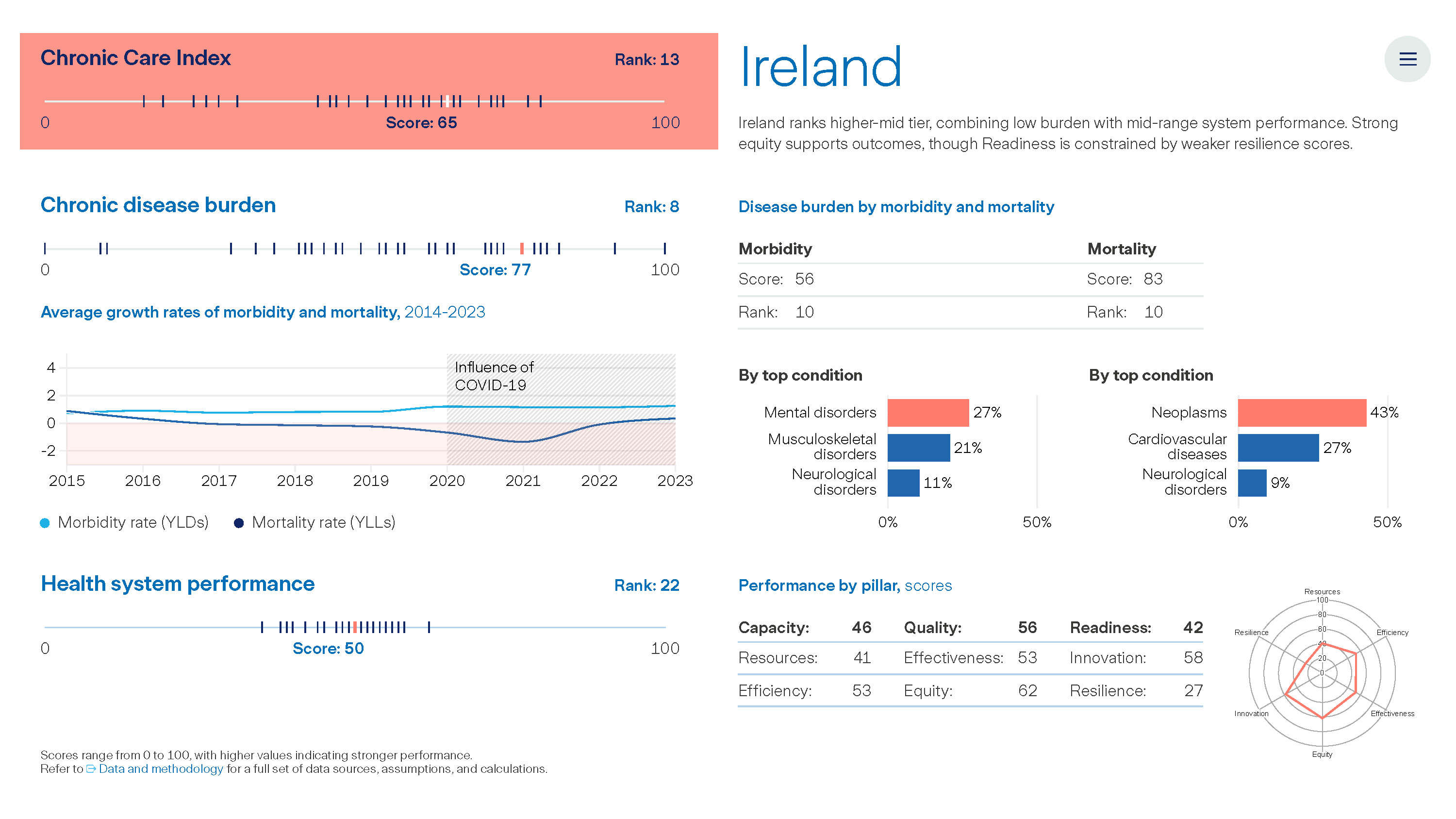
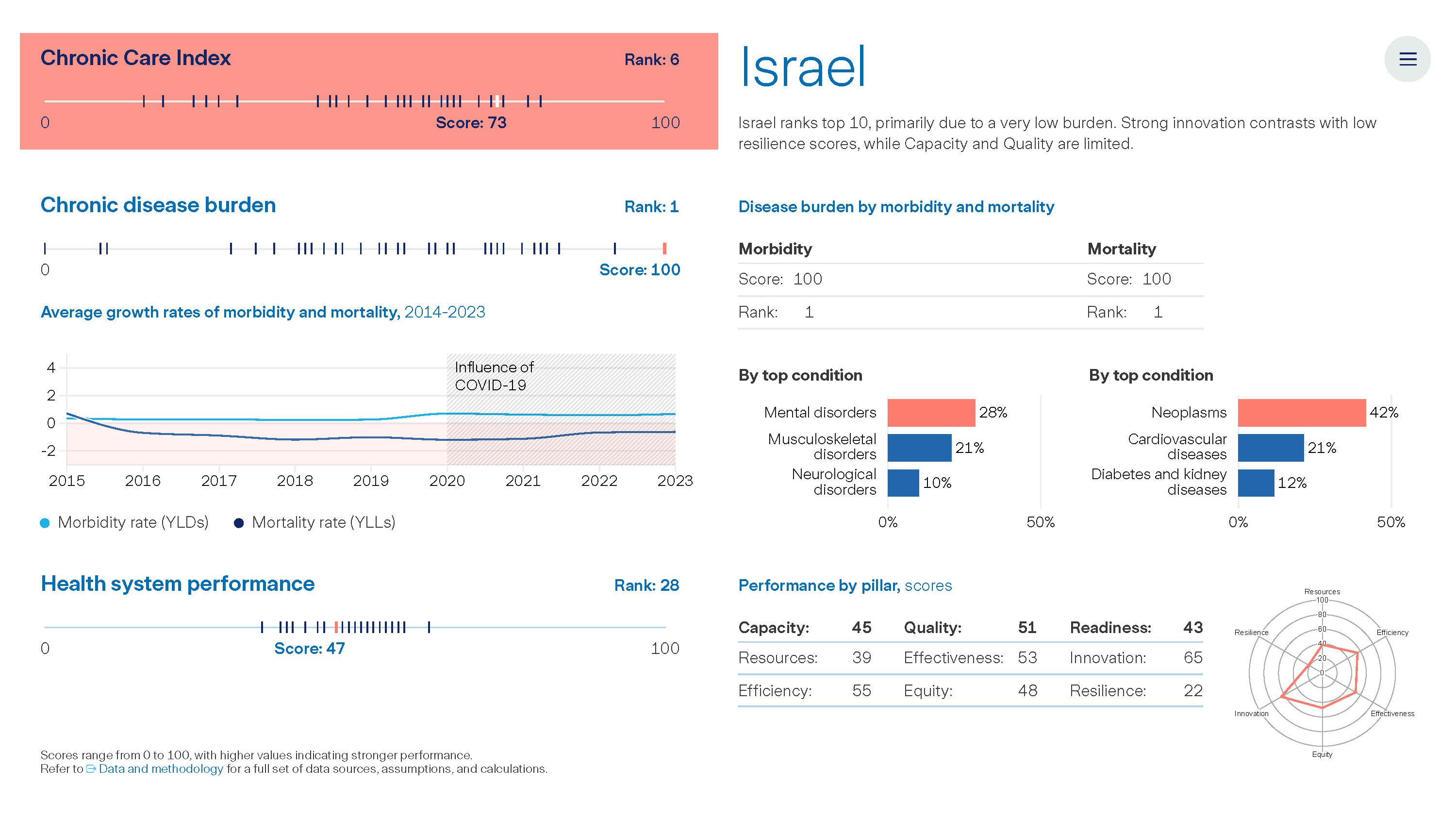
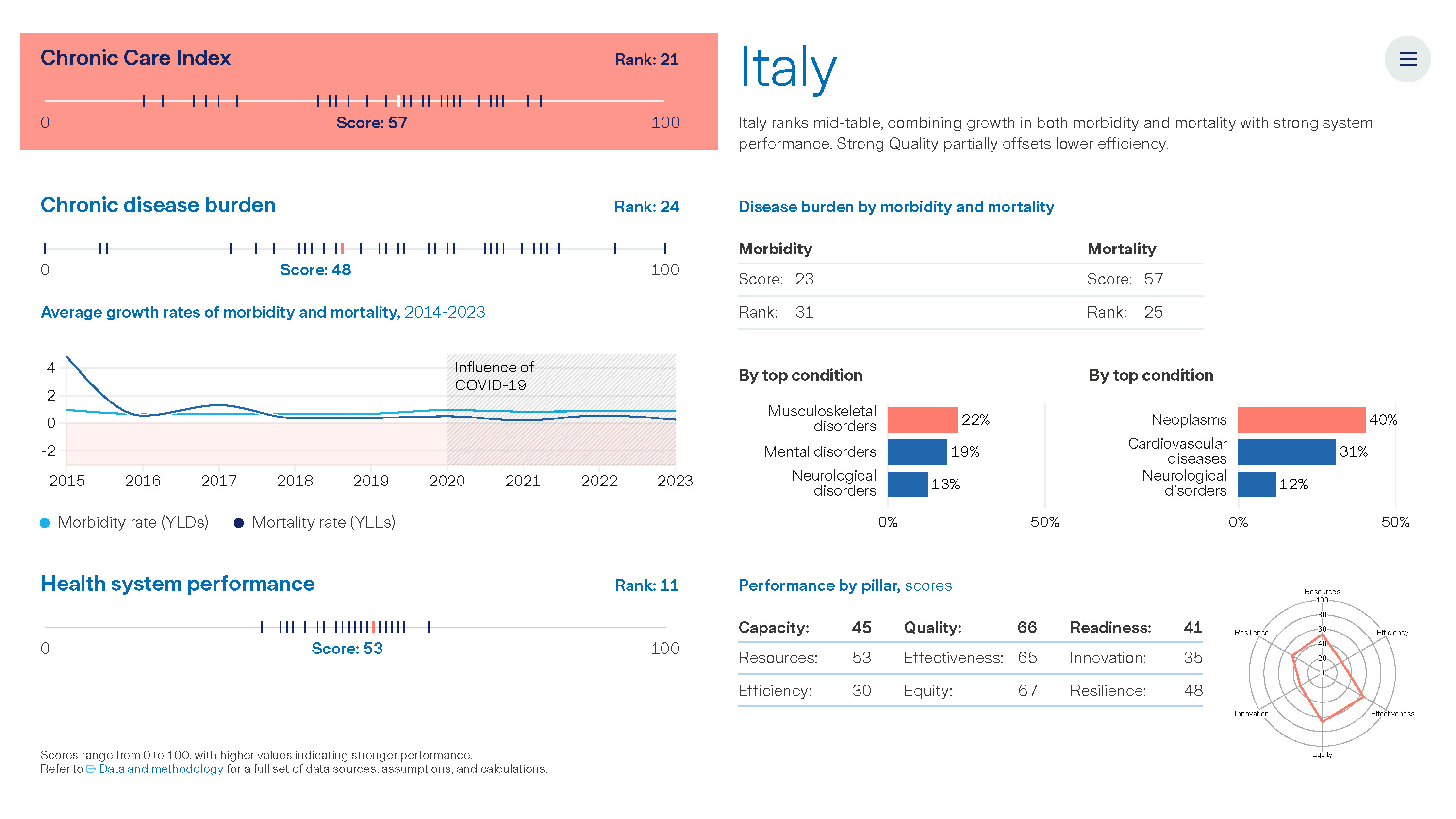
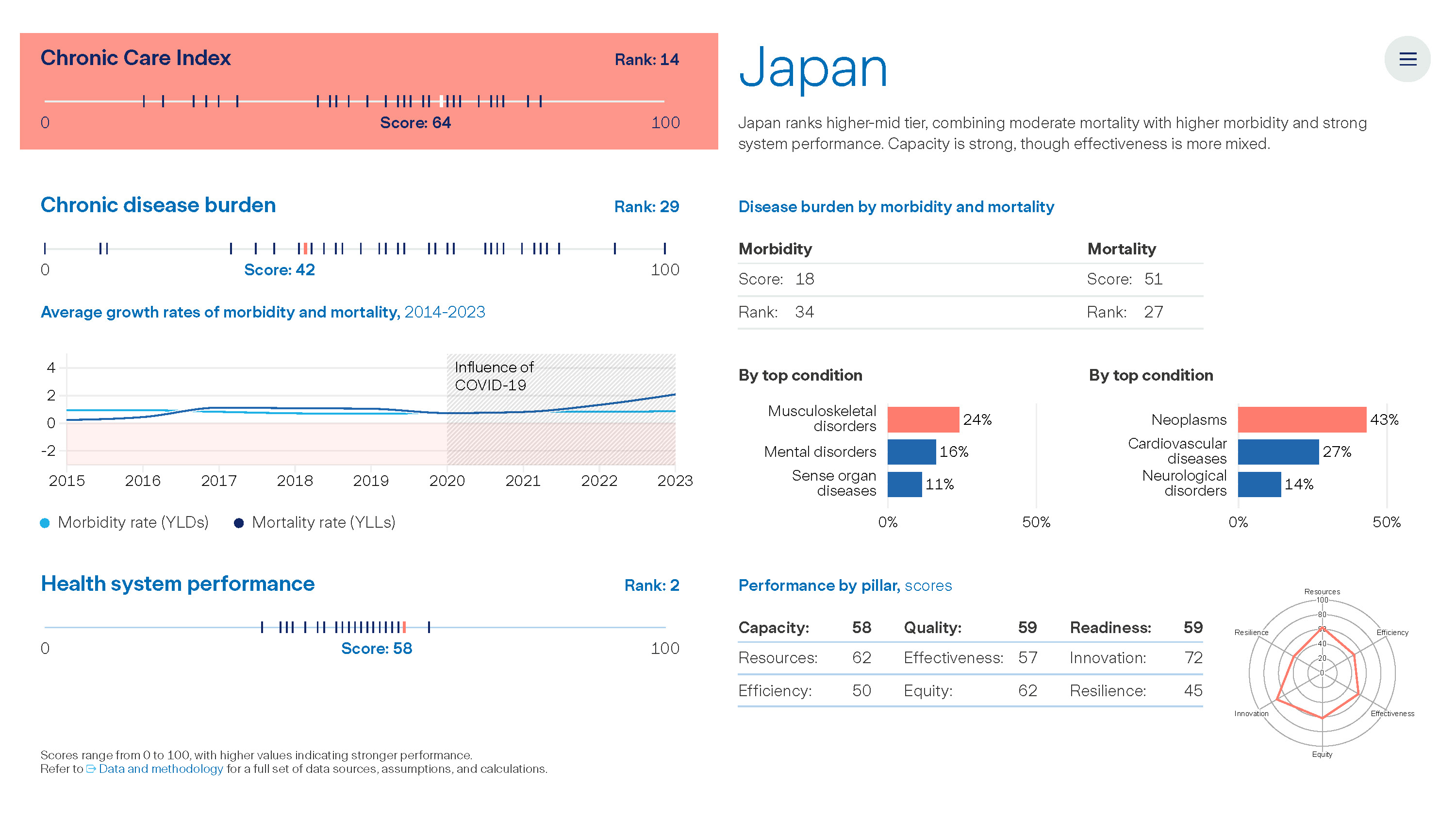
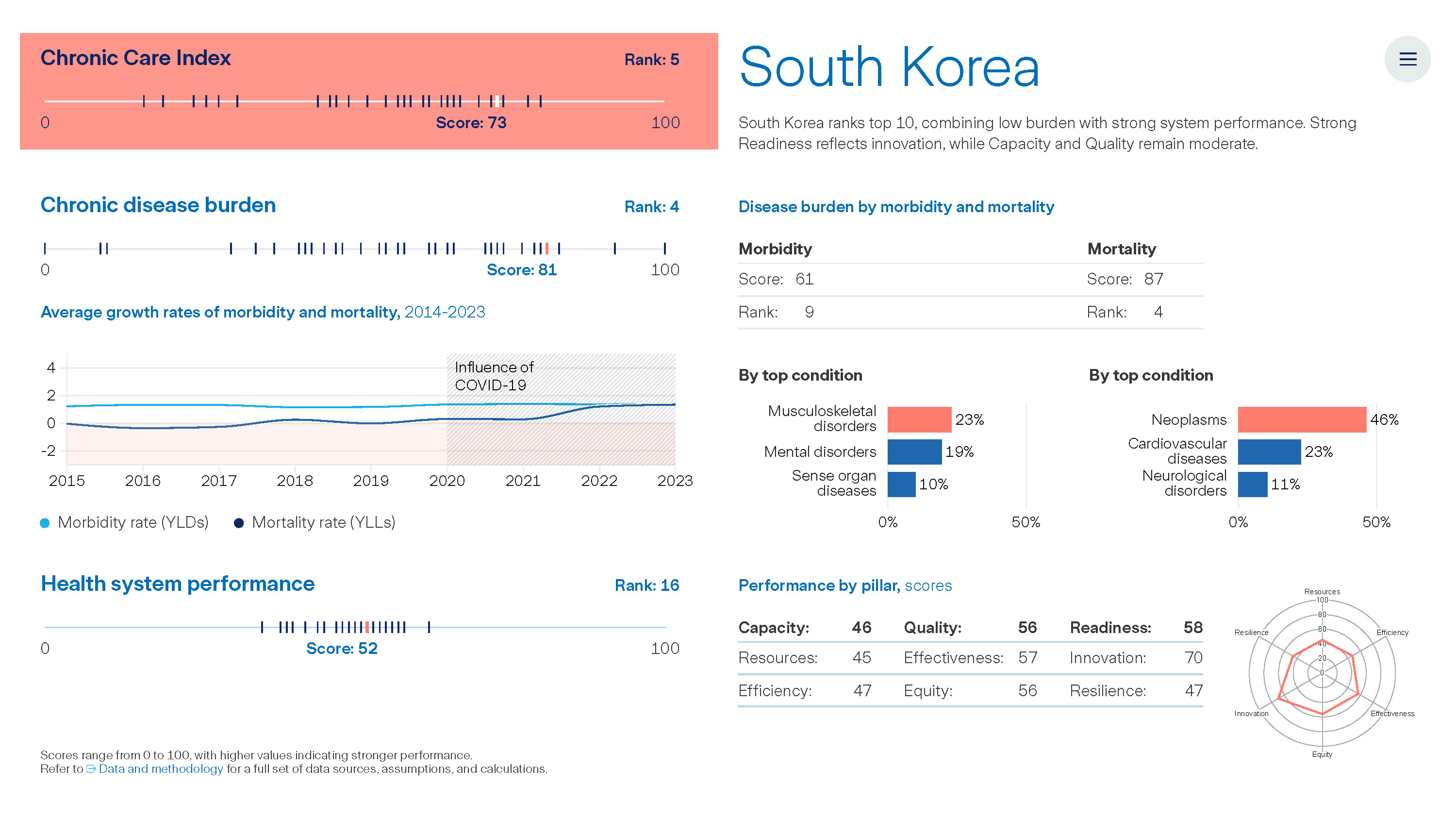
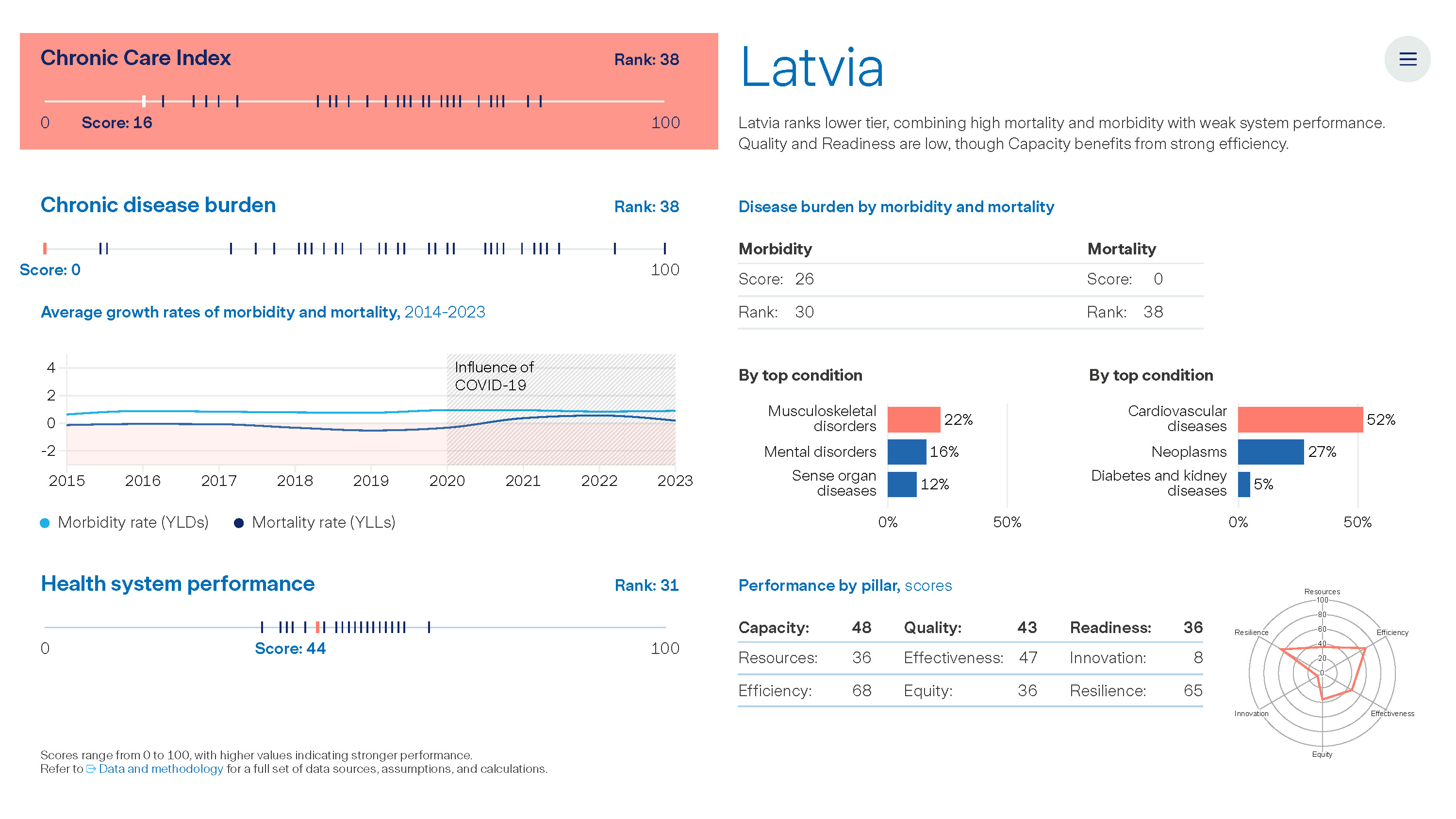
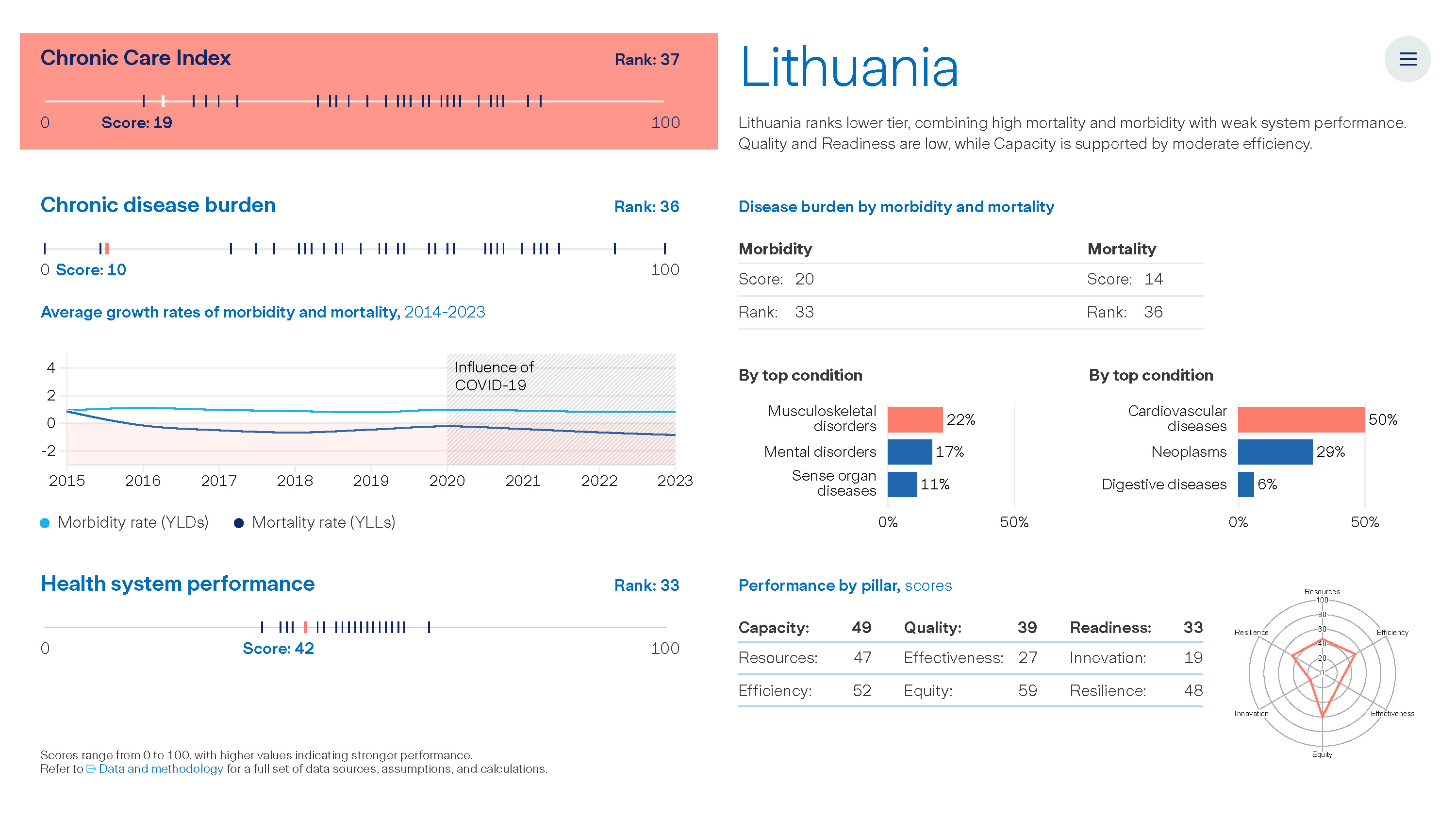
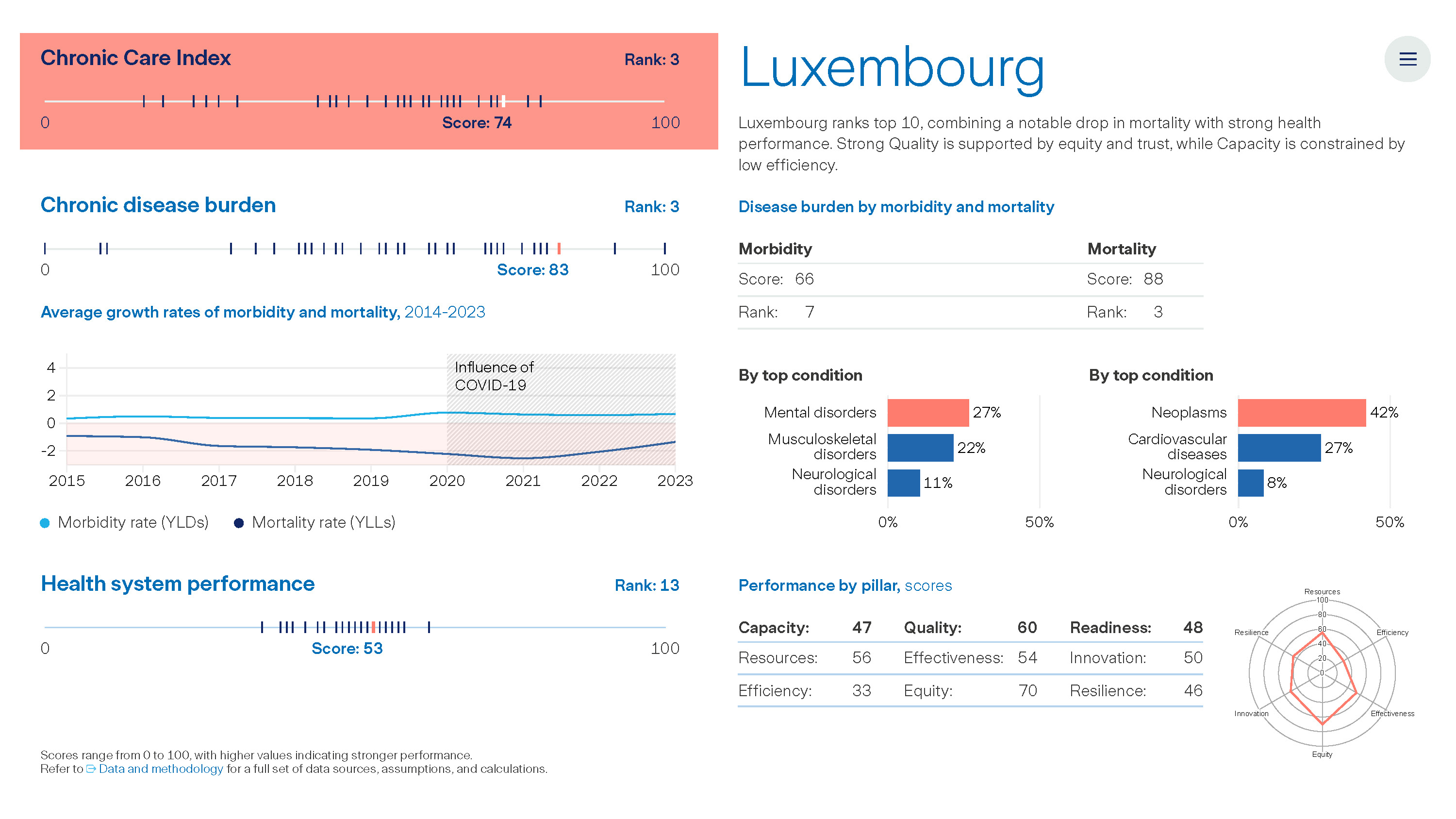
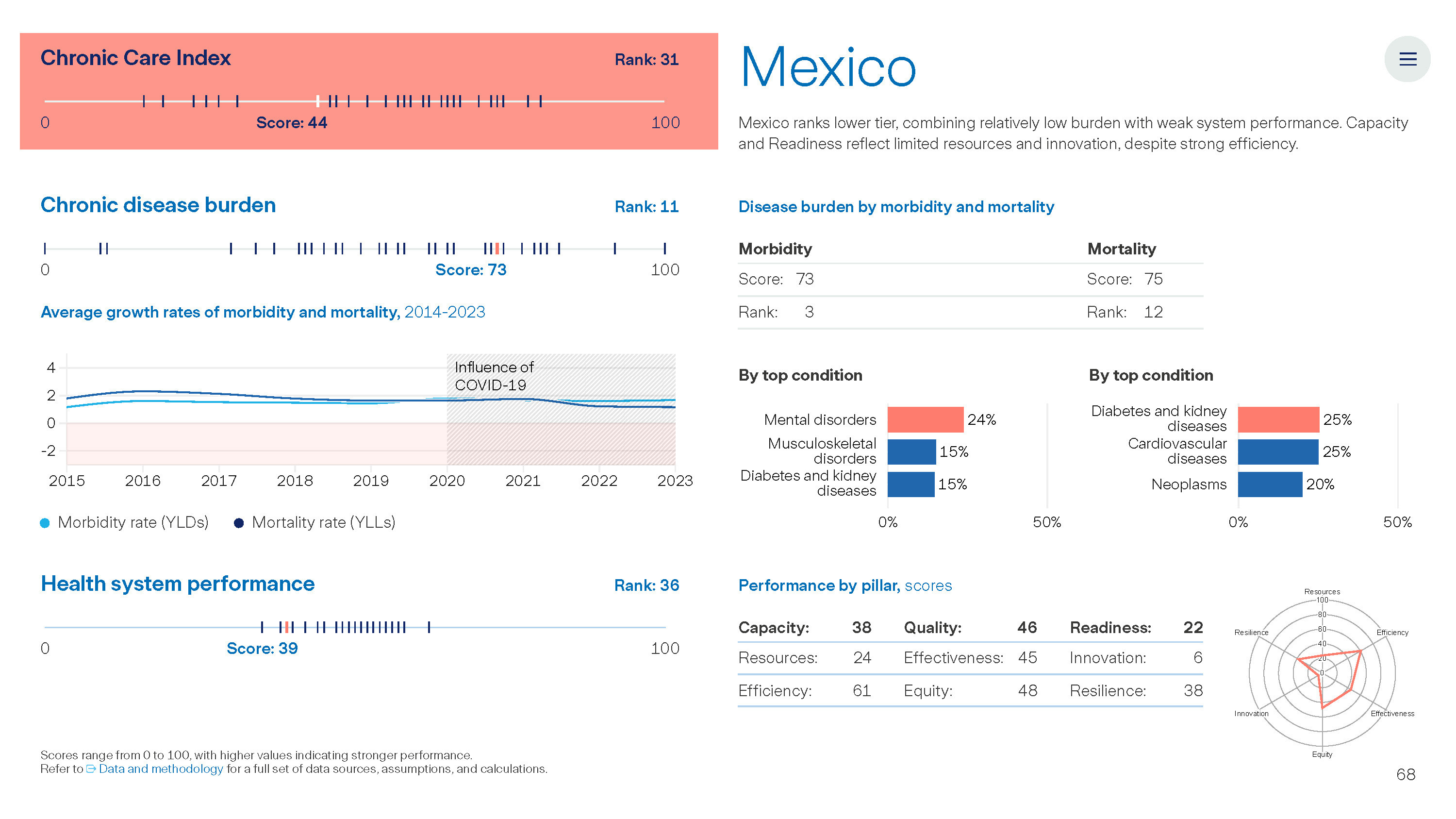
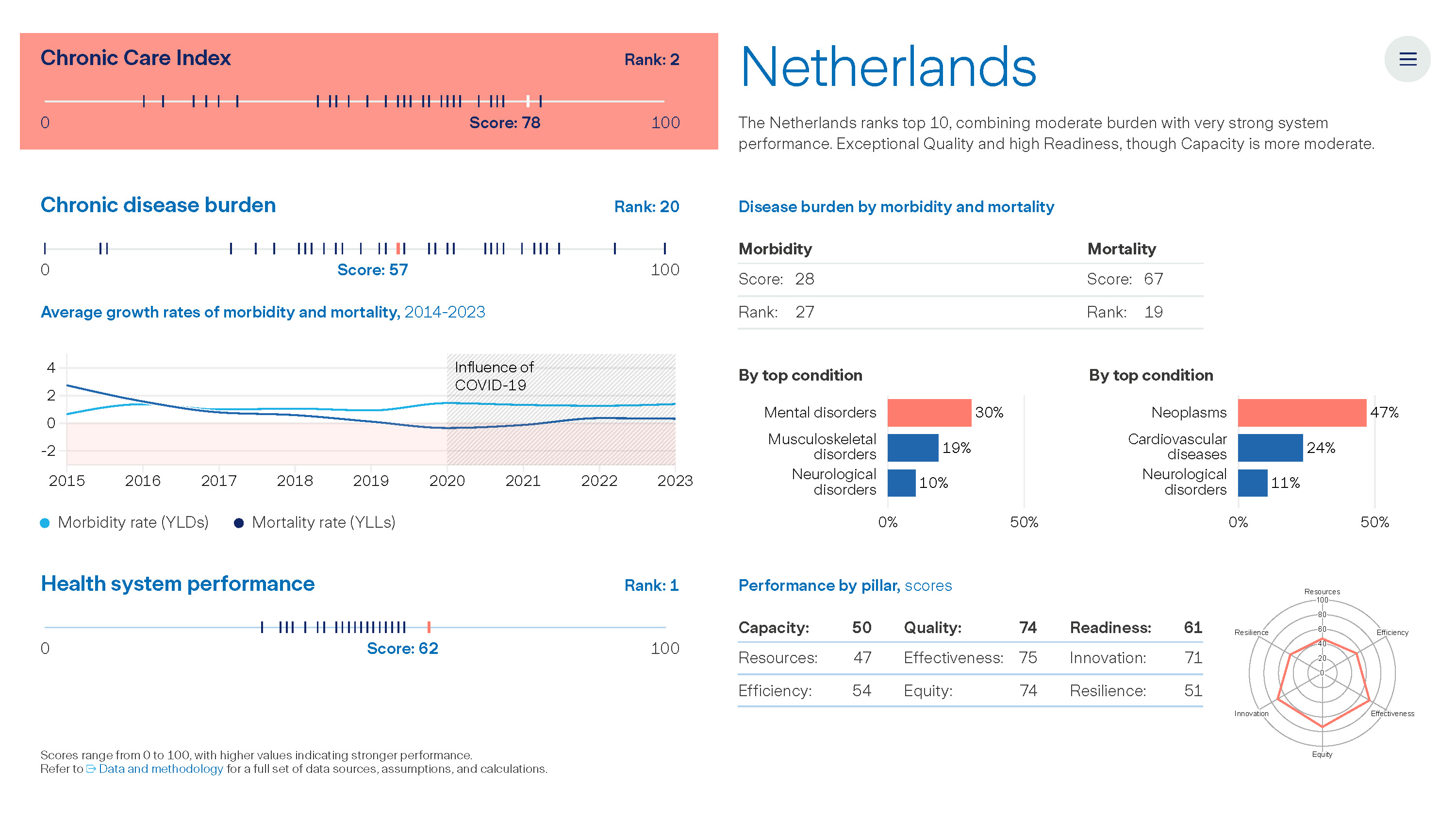
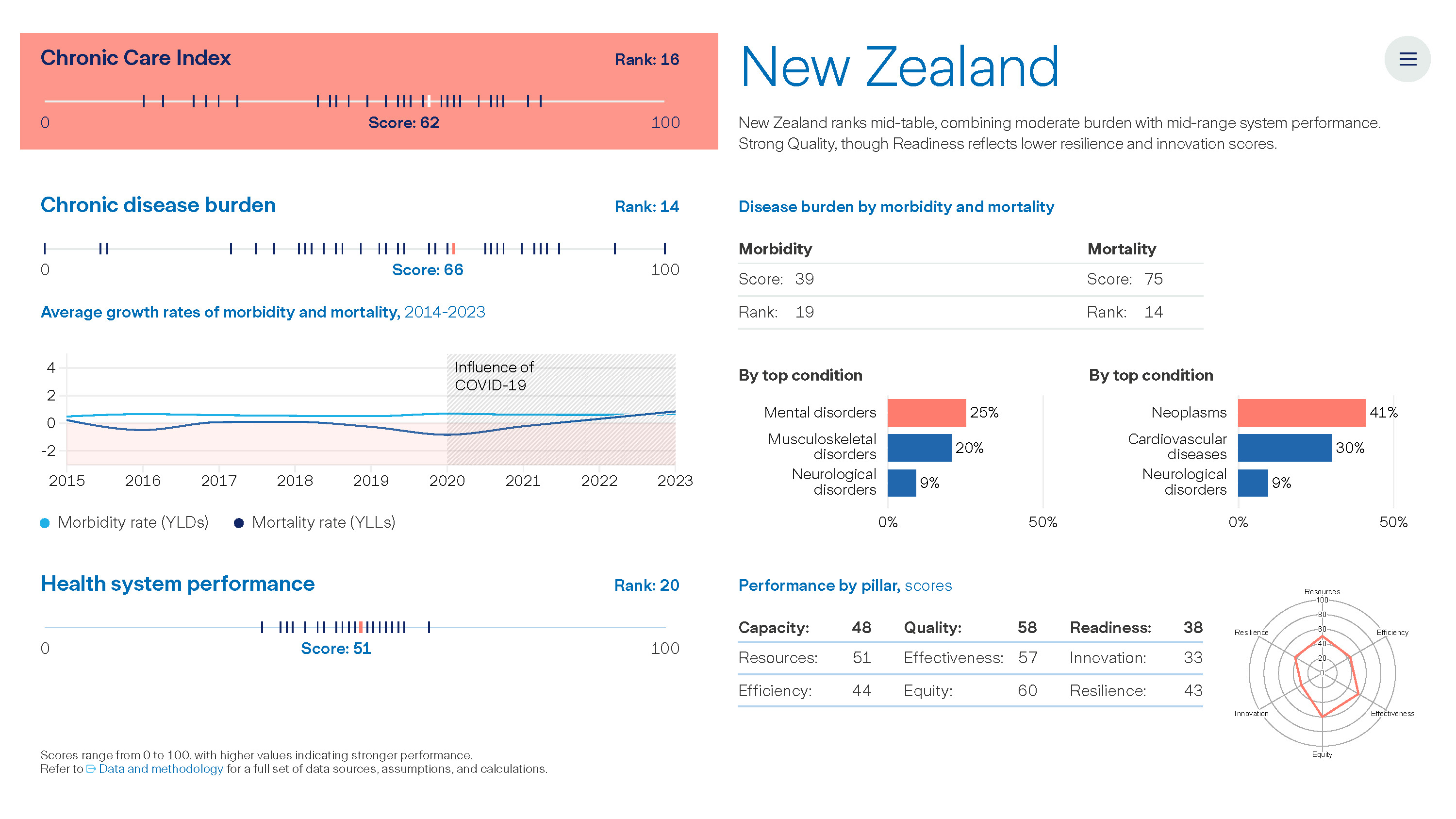
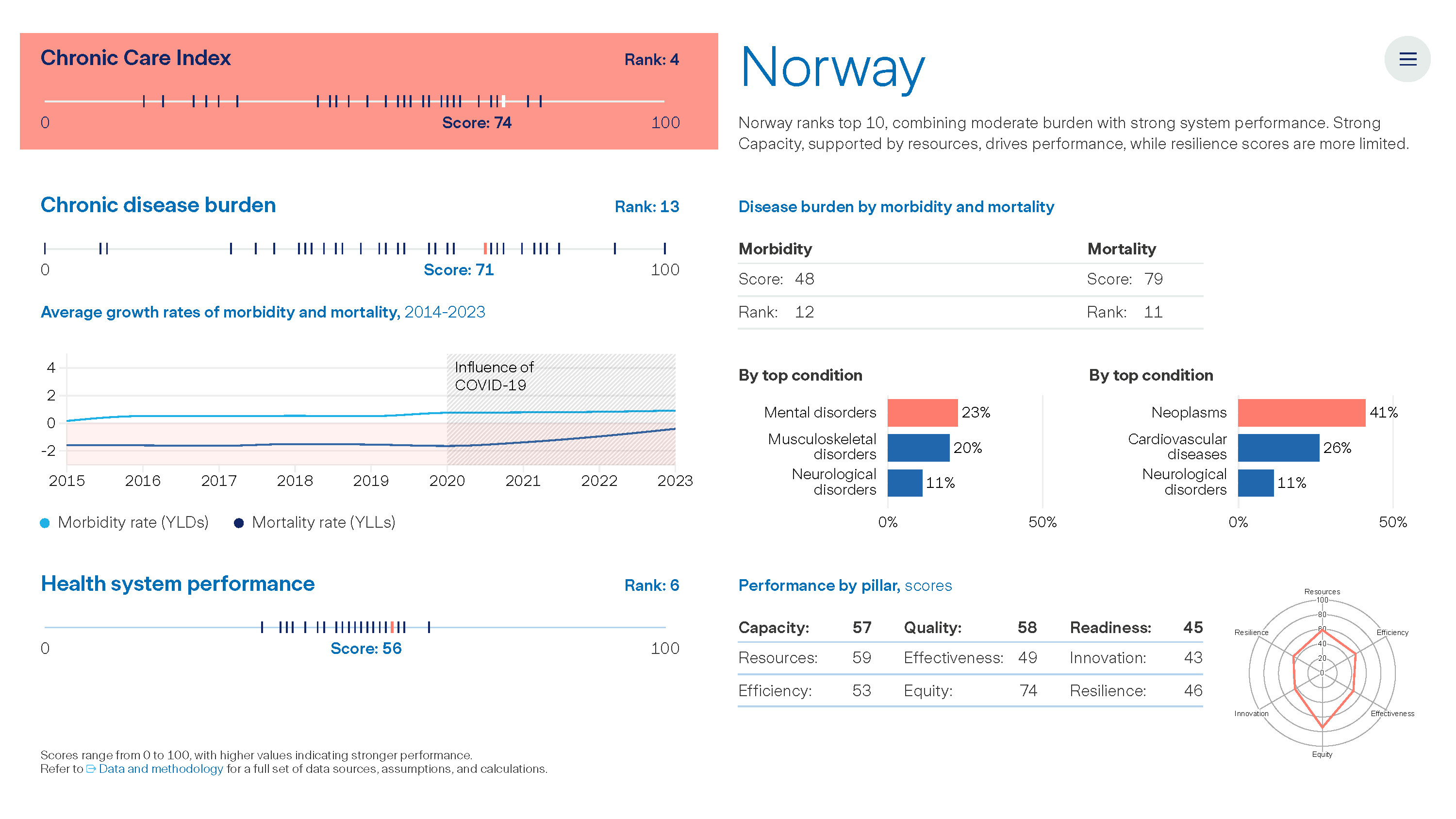
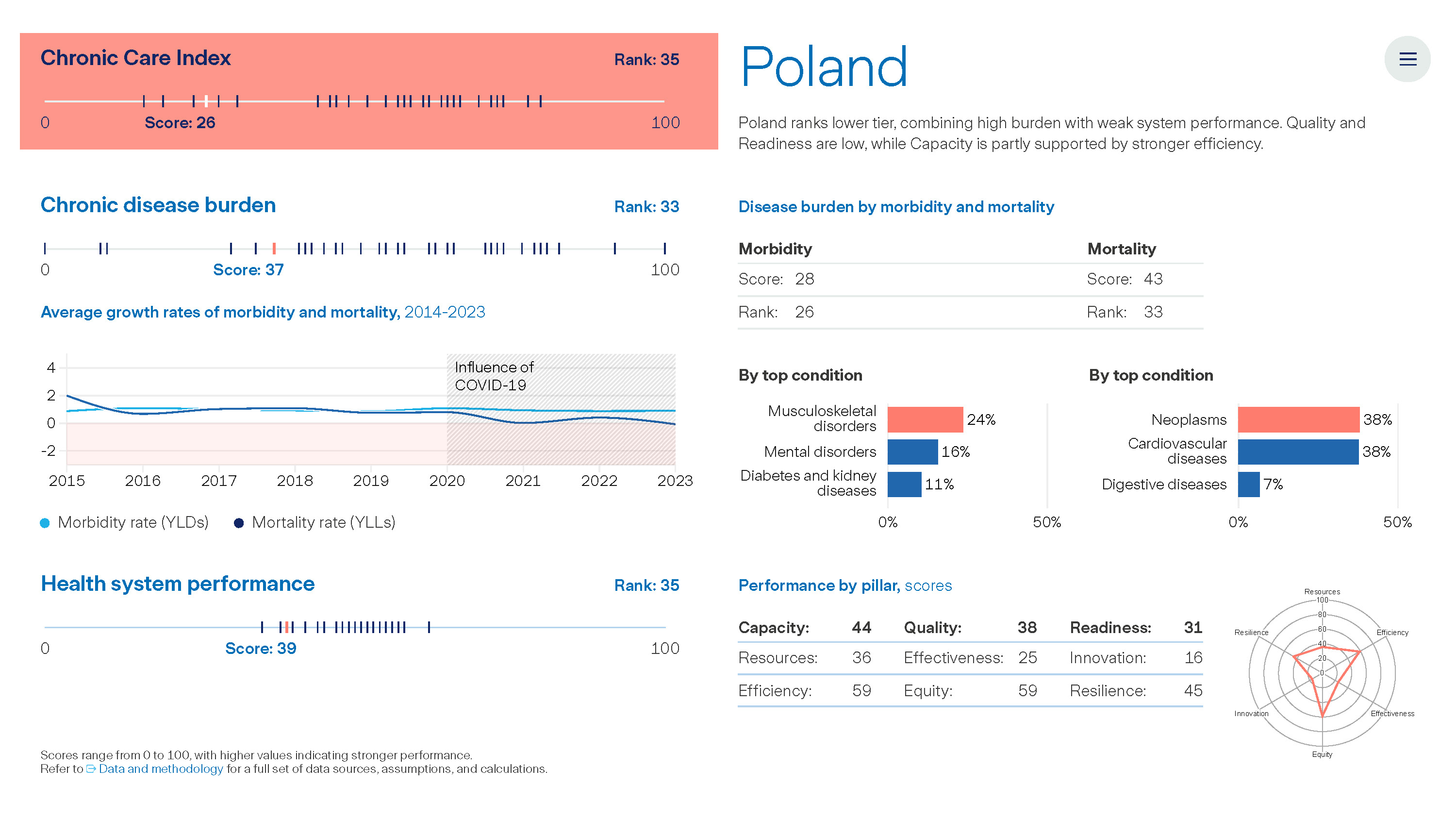
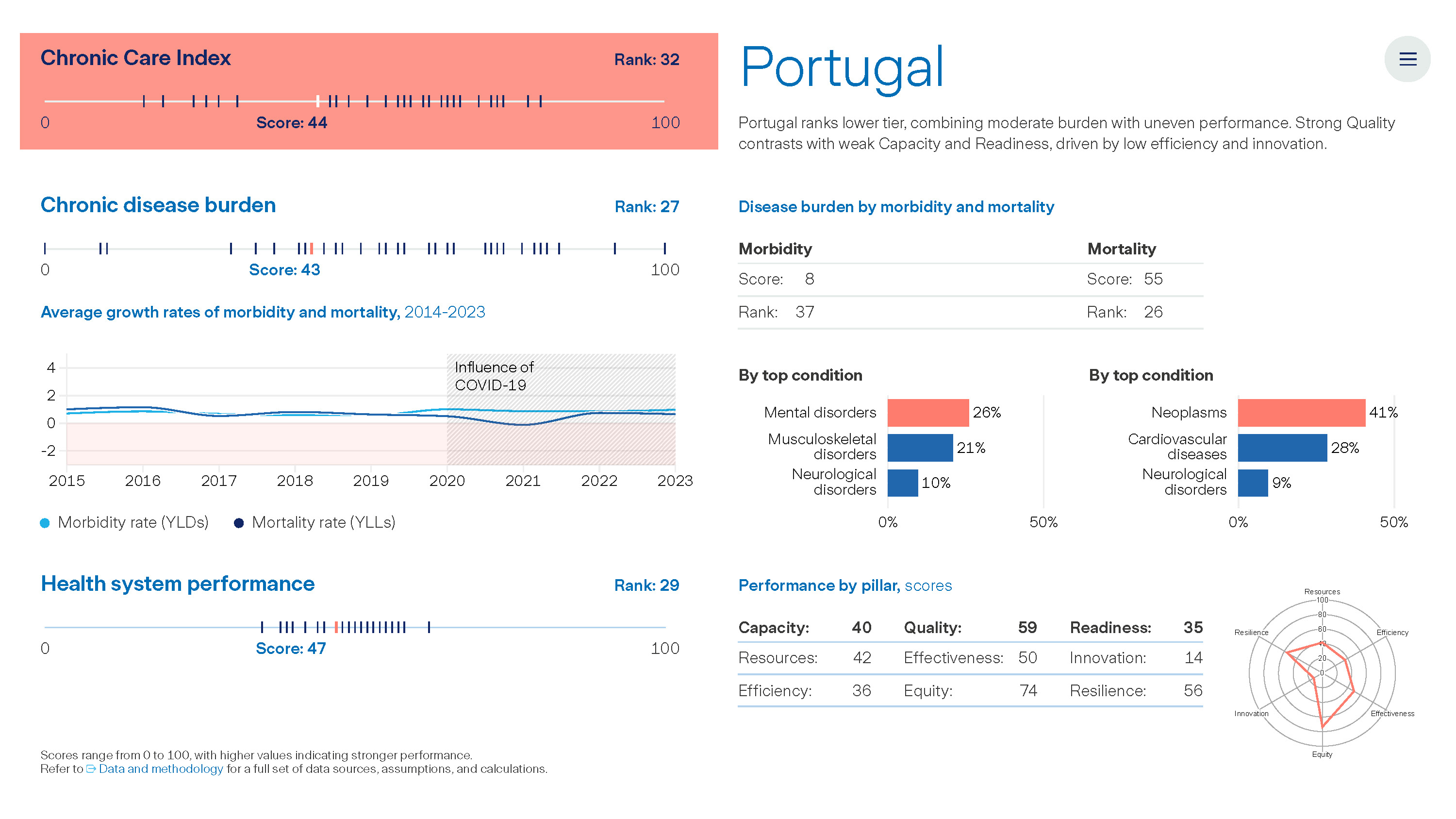
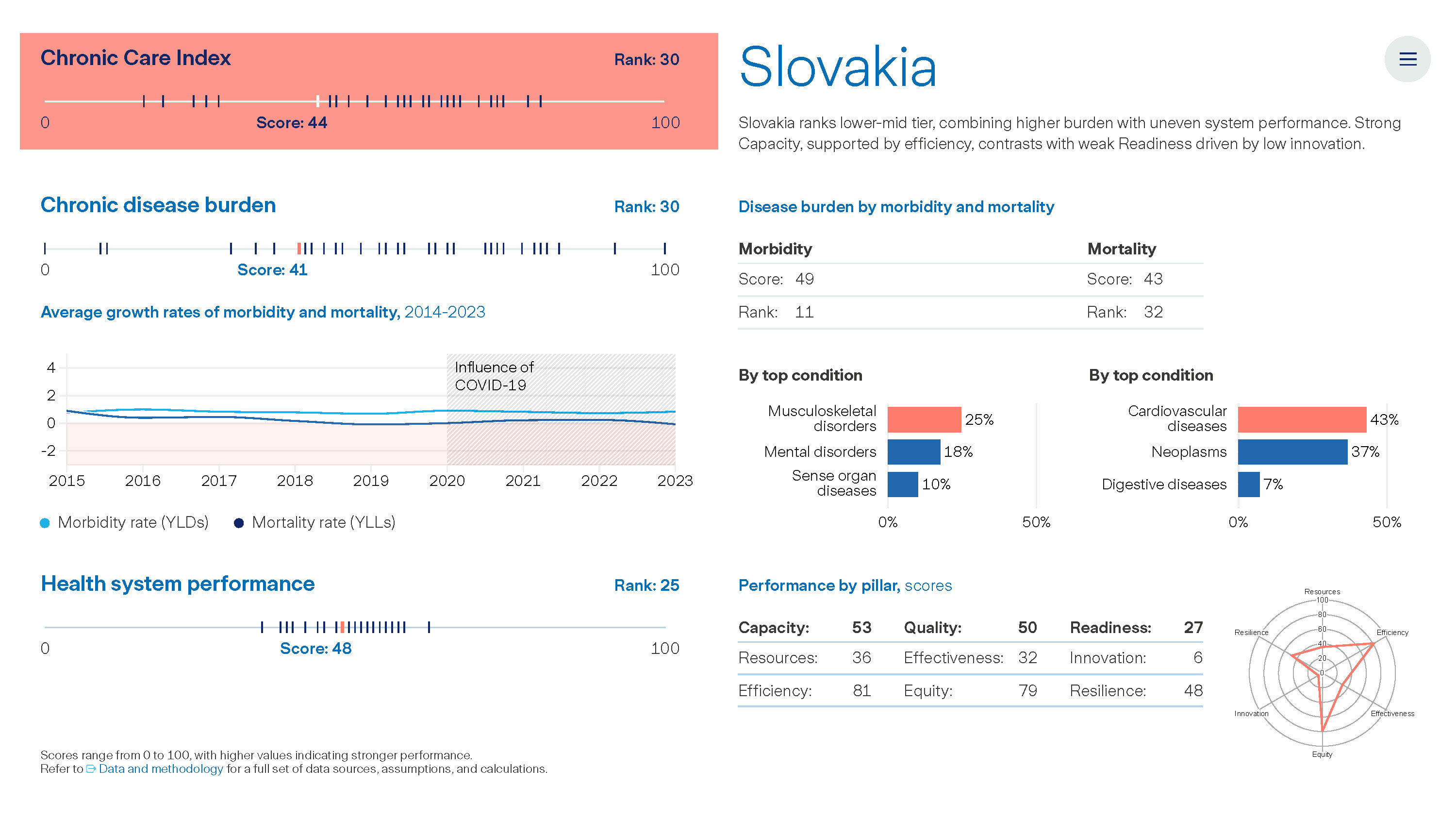
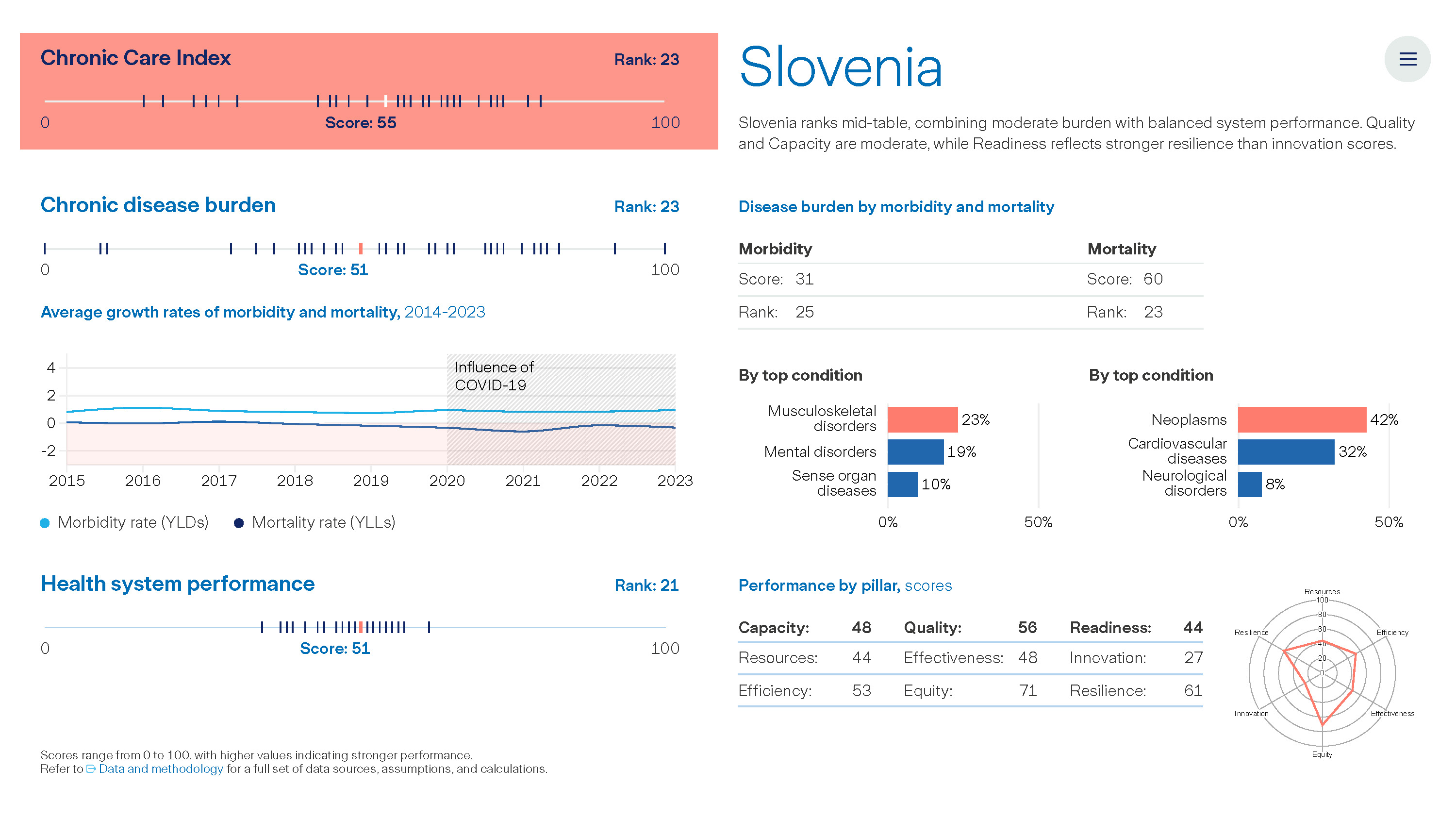
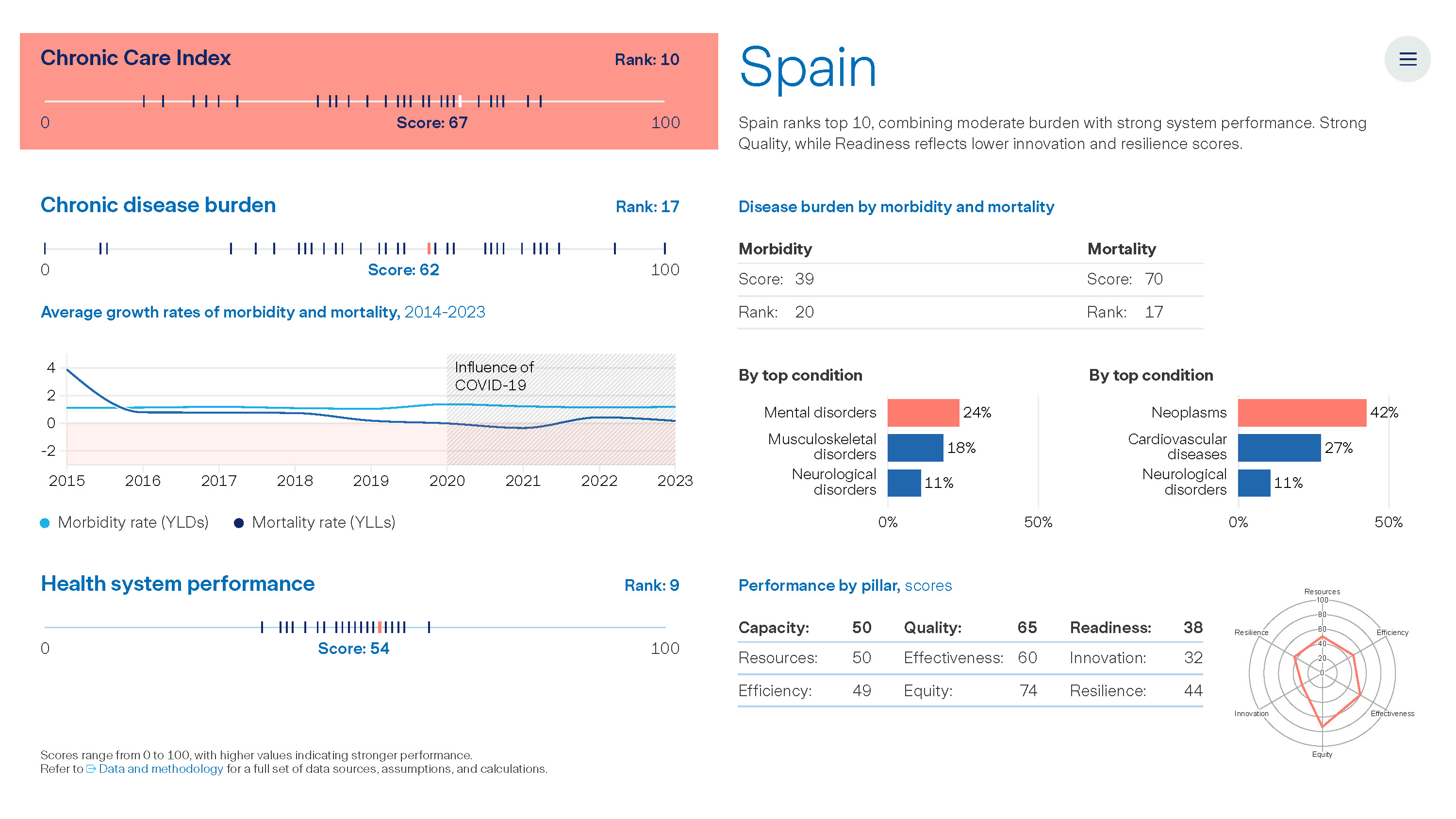
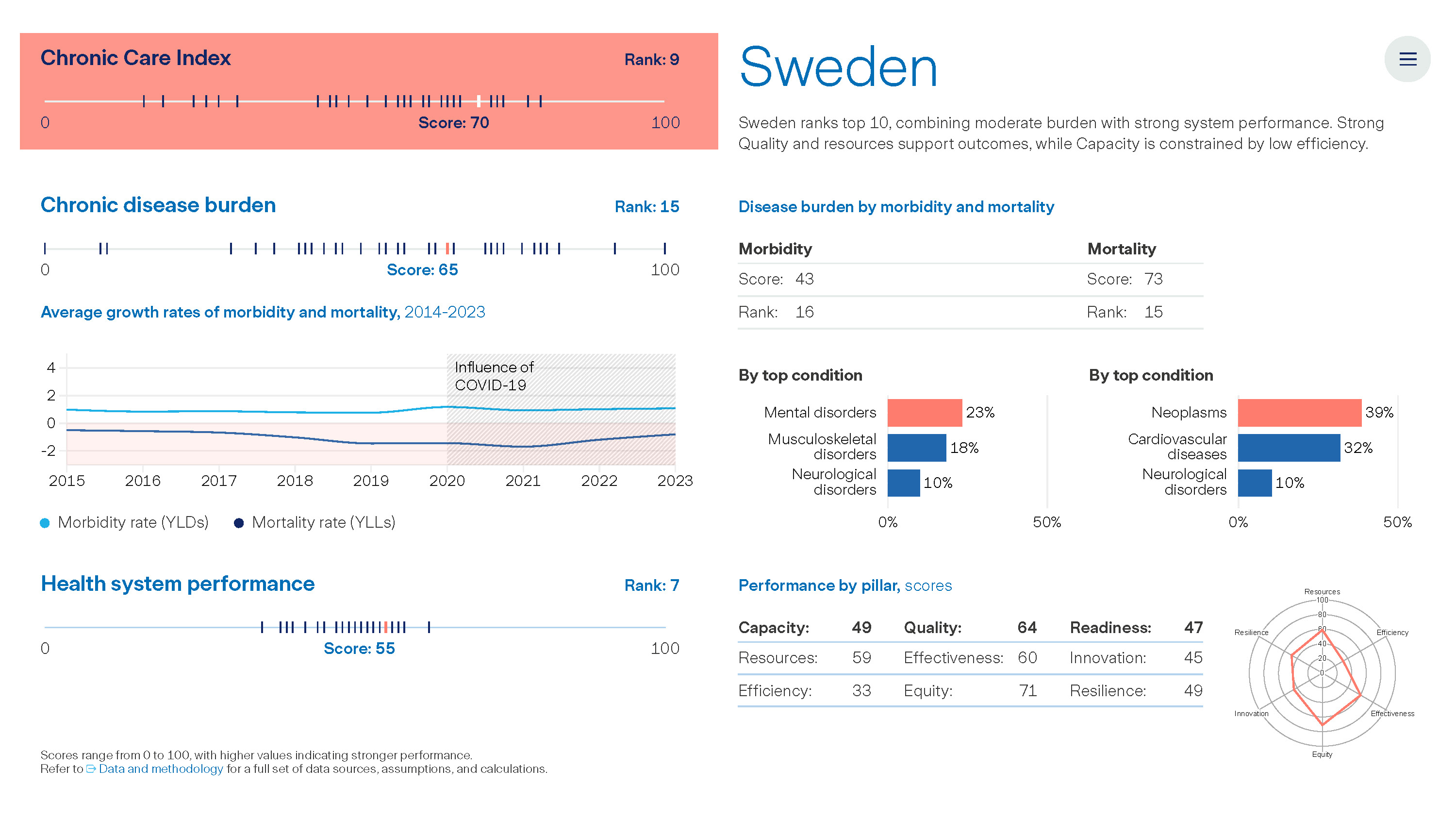
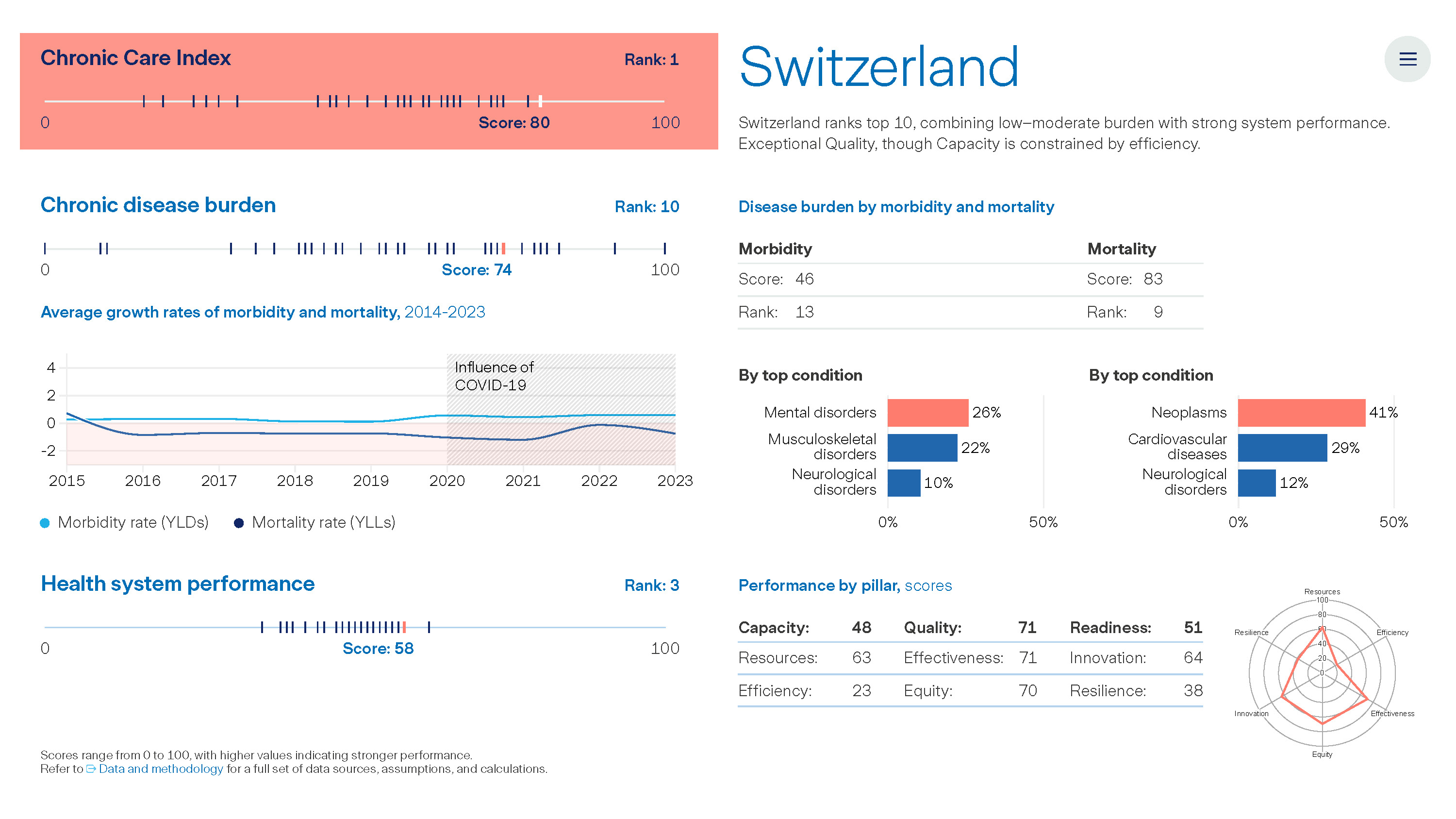
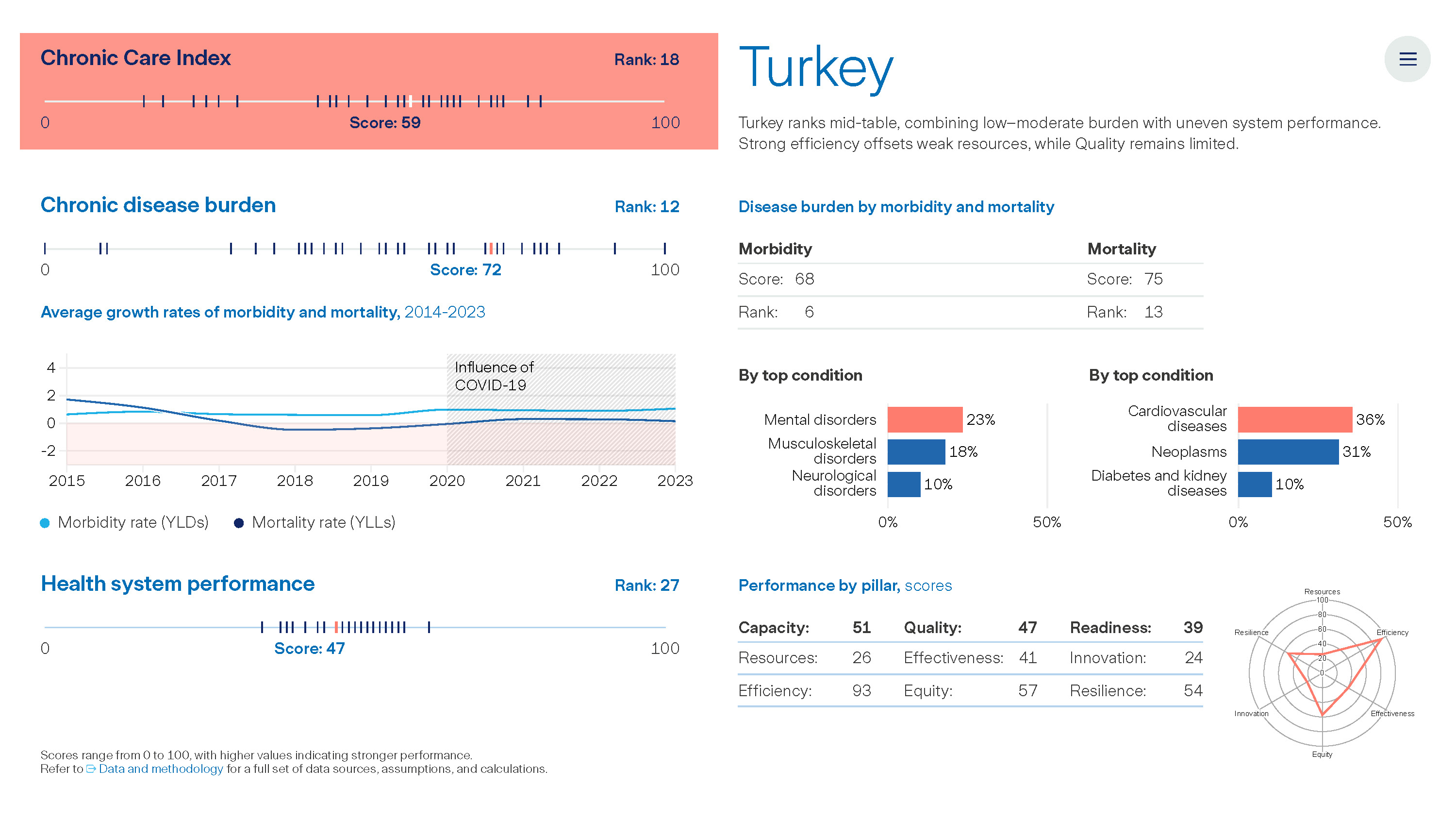
Explore the 38 OECD country profiles

Select a country flag to open the relevant country one-pager.

Read the full report

Explore the data, methodology, and country-level findings behind The Value of Chronic Care.