
Why mental health needs a chronic care approach
PersonalBlogOctober 9, 2026
New Zurich research shows that supporting mental health requires more than crisis support.
Every year around World Mental Health Day, we listen to powerful personal stories, public campaigns and renewed commitments to reducing the stigma often attached to it. All of this matters, of course. But awareness is only the beginning. If we’re honest, much of the public conversation still focuses on the moments of crisis: when someone reaches a breaking point, needs urgent support or can no longer continue as before.
We talk less about what happens next. And we talk far too little about the millions of people who live with mental health conditions not only for weeks or months, but for years.
For many, mental health conditions are chronic problems, part of everyday life. Depression, anxiety disorders and bipolar disorder, for example, can often follow a long and recurring course. They influence a person’s ability to work, care for family members, manage finances, maintain relationships and participate fully in society. Their effects may persist long after clinical diagnosis and initial treatment.
What the numbers say
Zurich’s recent research on The Value of Mental Health found that the greatest burden of mental ill health is not mortality. It is the long-term impact on people’s quality of life, wellbeing, ability to work and day-to-day functioning. In Germany alone, wellbeing losses associated with mental health conditions are projected to reach USD 349 billion by 2030, alongside USD 129 billion in productivity losses.
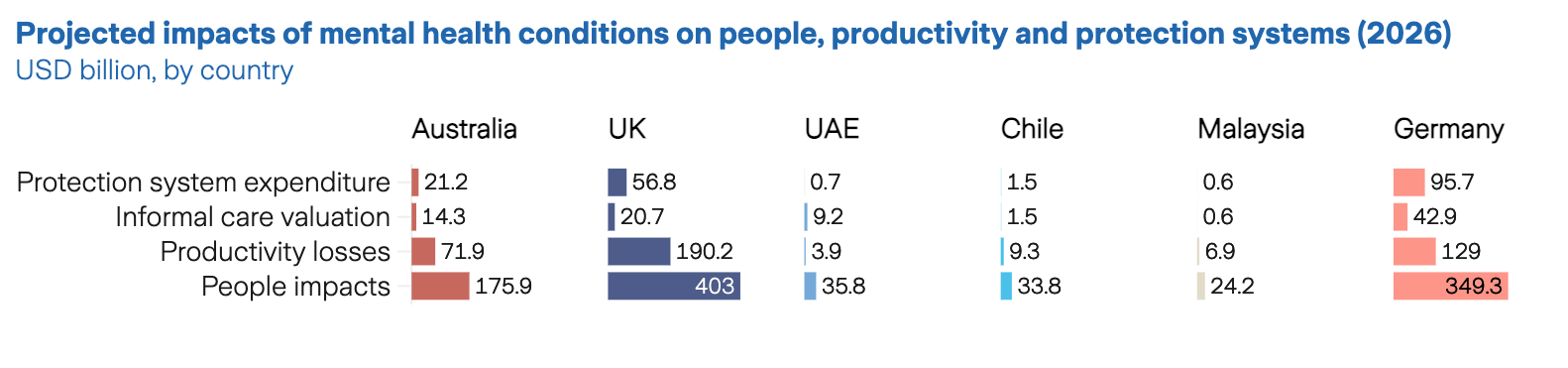
Source: Zurich Insurance Group. The Value of Mental Health (2026).
The economic costs are substantial, but behind every statistic is a person managing conditions that may change, return or continue over many years, while also navigating work, family life and financial responsibilities.
As Zurich’s The Value of Chronic Care report shows, supporting people with long-term health conditions requires more than a single intervention. We treat diabetes, cardiovascular disease or cancer as long-term health priorities, investing in prevention, early intervention, ongoing management and support systems that help people live well with these chronic conditions.
Mental health deserves the same kind of long-term thinking. After all, mental health conditions are among the largest contributors to chronic disease burden across OECD countries.
A chronic care perspective
This changes the questions we ask. Instead of asking how we respond when someone reaches a crisis point, we ask how we can help them remain healthy and resilient over the long term. Instead of asking whether someone can return to work after a period of illness, we ask how workplaces can support sustainable participation throughout their recovery journey. Instead of focusing only on treatment, we consider prevention, continuity of care and the broader support networks people depend on.
This perspective is particularly important at a time when demand for mental health support continues to grow. By 2030, nearly one in three working-age adults in Australia and the UK are projected to be living with a mental health condition.
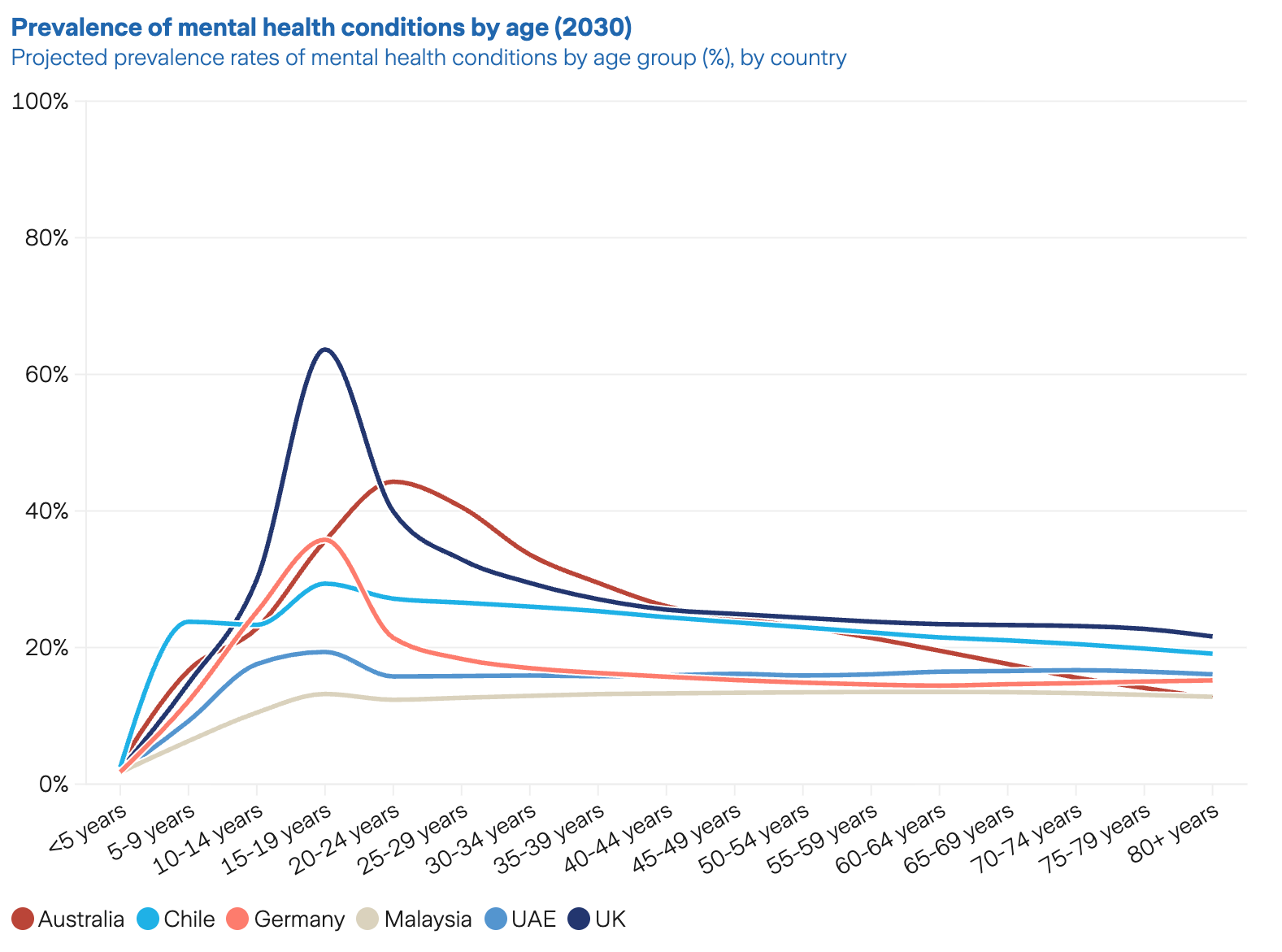
Primary sources: IHME (2025), World Bank (2025).
Work can be part of the solution
Health and work are closely connected. Poor mental health can make it harder to enter, remain in or return to employment. For example, people in the UK with a mental health condition have an employment rate of just 53 percent, compared with 82 percent for those without one – a 29 percent employment gap.
Regular work can provide a sense of purpose, routine, social connection and financial security. Employers therefore have an important role to play. Effective workplace support goes beyond awareness campaigns or one-off wellbeing initiatives. It creates environments where mental health support is integrated into everyday working life. It equips managers to recognize challenges early and offers flexibility when people need it. And it supports recovery in ways that acknowledge that progress is rarely linear. It also recognizes – and this is just as important – that mental health is part of overall health.
Looking toward prevention
People’s needs are evolving, and the insurance industry will also have a role to play. We will continue to explore how protection and partnerships can support early intervention and recovery. This may mean looking beyond claims to help people find appropriate care support sooner and offering services that reflect the realities of recovery while avoiding artificial distinctions between mental and physical health.
The effects extend beyond the person with the condition. In the UAE, mental health conditions are projected to require around 1.7 billion hours of informal care annually by 2030, much of it provided by family members. Women frequently carry a large share of that care in addition to managing work and other family responsibilities.
A long-term approach to mental health must therefore look beyond health care alone. It requires collaboration between health systems, employers, insurers, policymakers and communities. It requires investment in early intervention and sustained support. And it requires recognizing that living well with a mental health condition is not simply a medical challenge; it is a social and economic one as well.
On this World Mental Health Day, we have an opportunity to move the conversation forward. Awareness remains important. Reducing stigma remains essential. But neither is enough on its own. Mental health is a fundamental component of long-term health, and it should be supported with the same commitment, consistency and resources that we bring to other major health challenges.
For millions of people, mental health is part of everyday life. The support available to them should reflect that reality.